
Cheaper roller-only fixes
At San Leandro's median income of $98,063, a roller replacement is almost always the cheaper and more sensible move over a full door or opener swap, as long as the track and springs underneath are still sound.
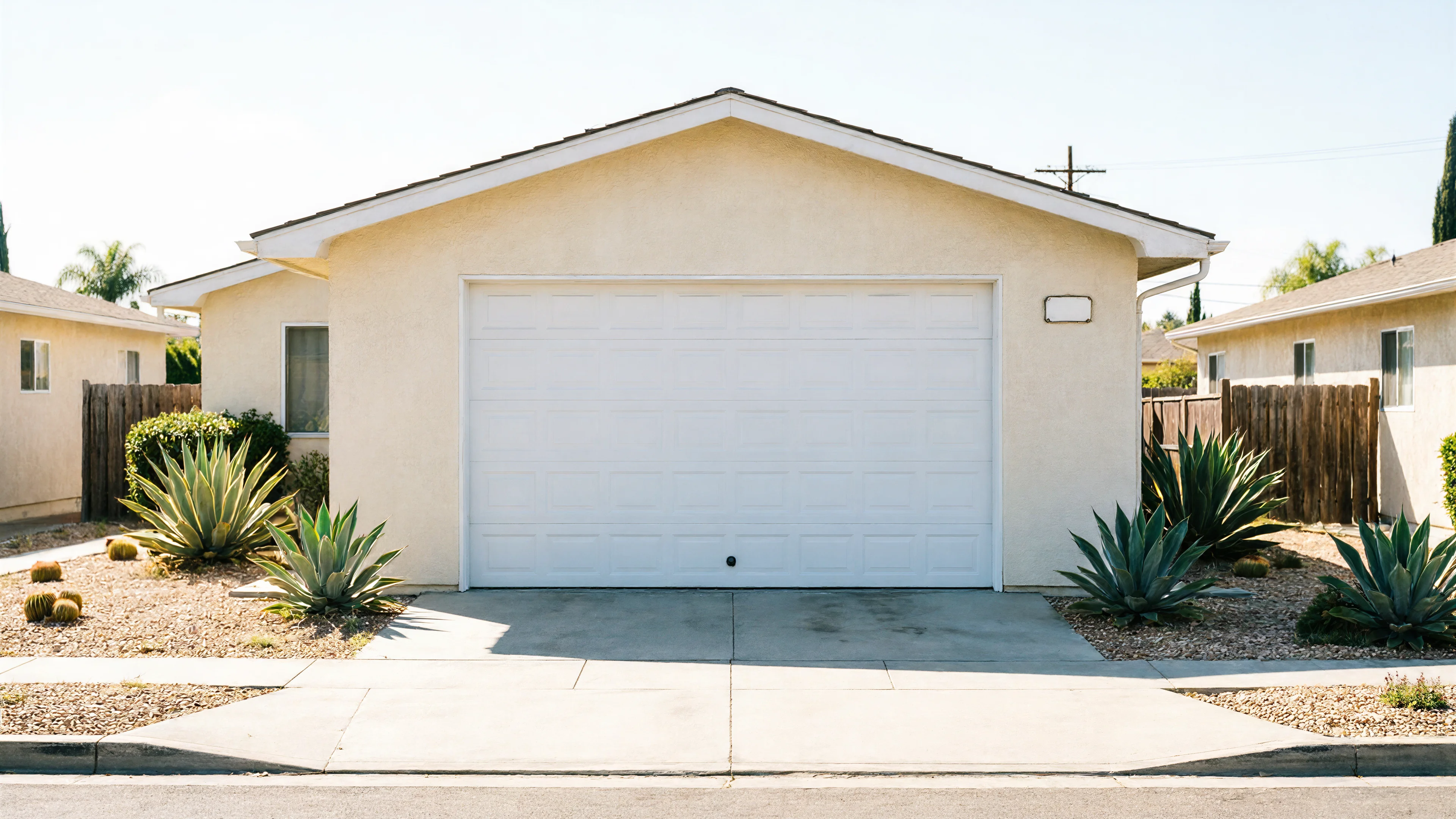
San Leandro, Alameda
San Leandro's 1959-era houses carry original steel rollers on steel tracks. We explain the noise, the repair-or-replace math at local income levels, and what the fix involves.
Local causes
San Leandro's median household income sits at $98,063, well under the broader service area's $163,199. That gap matters for roller jobs because it sets where the repair-or-replace line actually falls. A homeowner here is more often choosing between fixing what's on the door now and living with it a while longer, not jumping straight to a full door swap. Most houses on this side of town went up around 1959, a few years ahead of the 1965 median for the wider area and squarely in the 1960s-70s stock that makes up most of the 53 communities we work across. That means steel rollers riding in steel tracks, installed before nylon rollers were standard, and bent or worn in ways that show up as noise and binding rather than outright failure. We come from Alameda, six miles north, and we're not pretending to have a yard or a crew based in San Leandro. What we do have is a read on what a roller job on a house this age actually needs, and what it doesn't.
Pricing
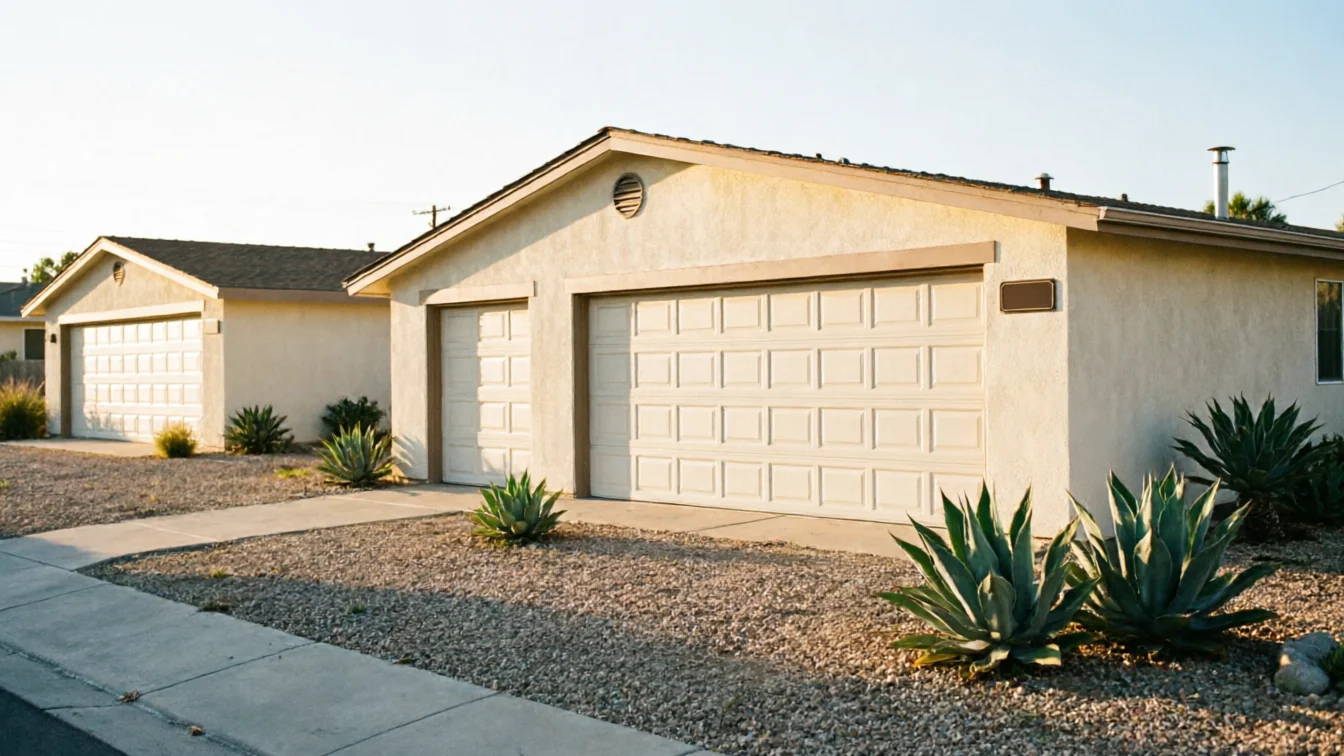
We don't have a posted price for this job, and we're not going to invent one here. What we can tell you is how the decision usually gets made.
At San Leandro's median income of $98,063, a roller replacement is almost always the cheaper and more sensible move over a full door or opener swap, as long as the track and springs underneath are still sound.
Where it stops being a bargain is when the rollers have been grinding against a bent track long enough to wear the hinges and the panel corners too - at that point you're paying for a roller job that doesn't actually fix the noise. We'll tell you straight if that's what we're looking at before we start, rather than selling a roller swap that won't hold.
Symptoms
On a door built around 1959, the complaint is usually the same: a grinding or popping sound as the door travels, worse at the top or bottom of the run where the track curves. Steel rollers on steel track don't fail quietly - they chatter, and the chatter gets louder as the roller wears flat on one side. Some owners notice the door jerks instead of gliding, especially on cold mornings, though San Leandro's mild temperate climate means you're not dealing with the ice-related stiffness that colder parts of the country see. More often the cause is just decades of use on hardware that was never upgraded when the opener was added later.
Watch-outs
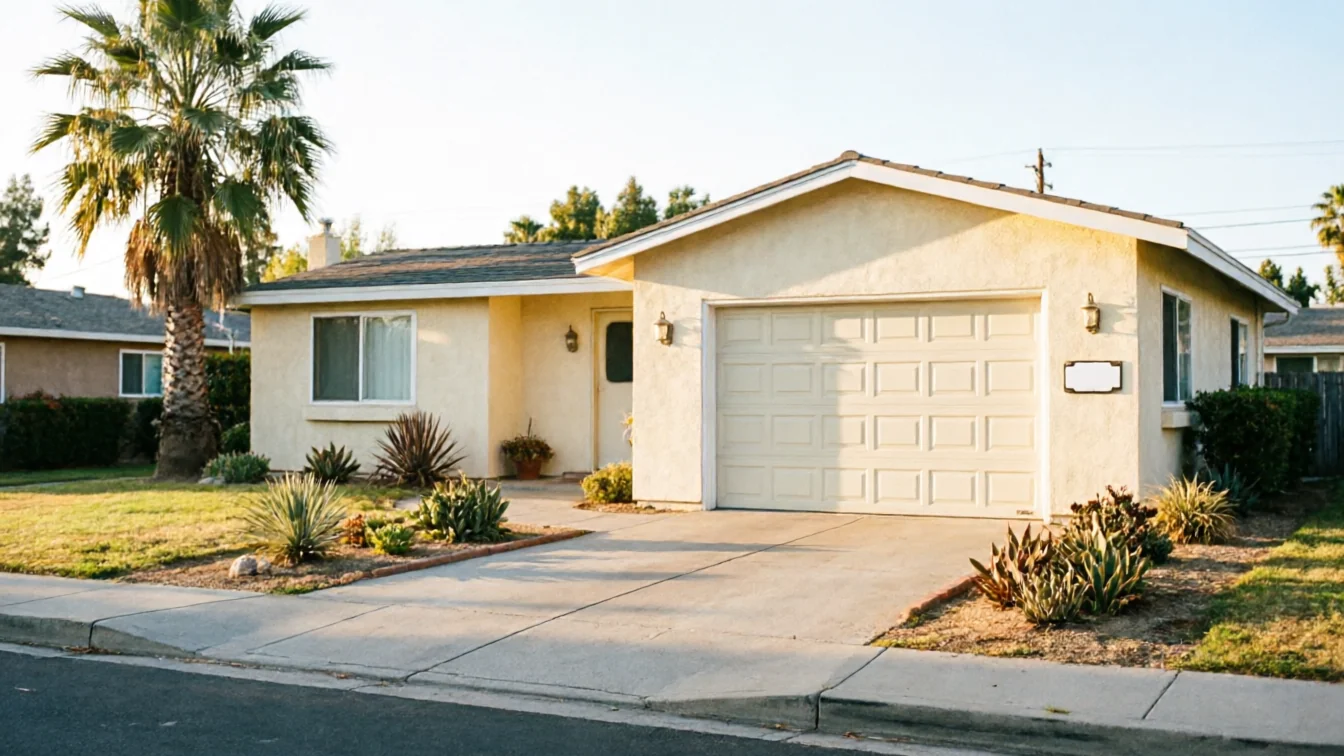
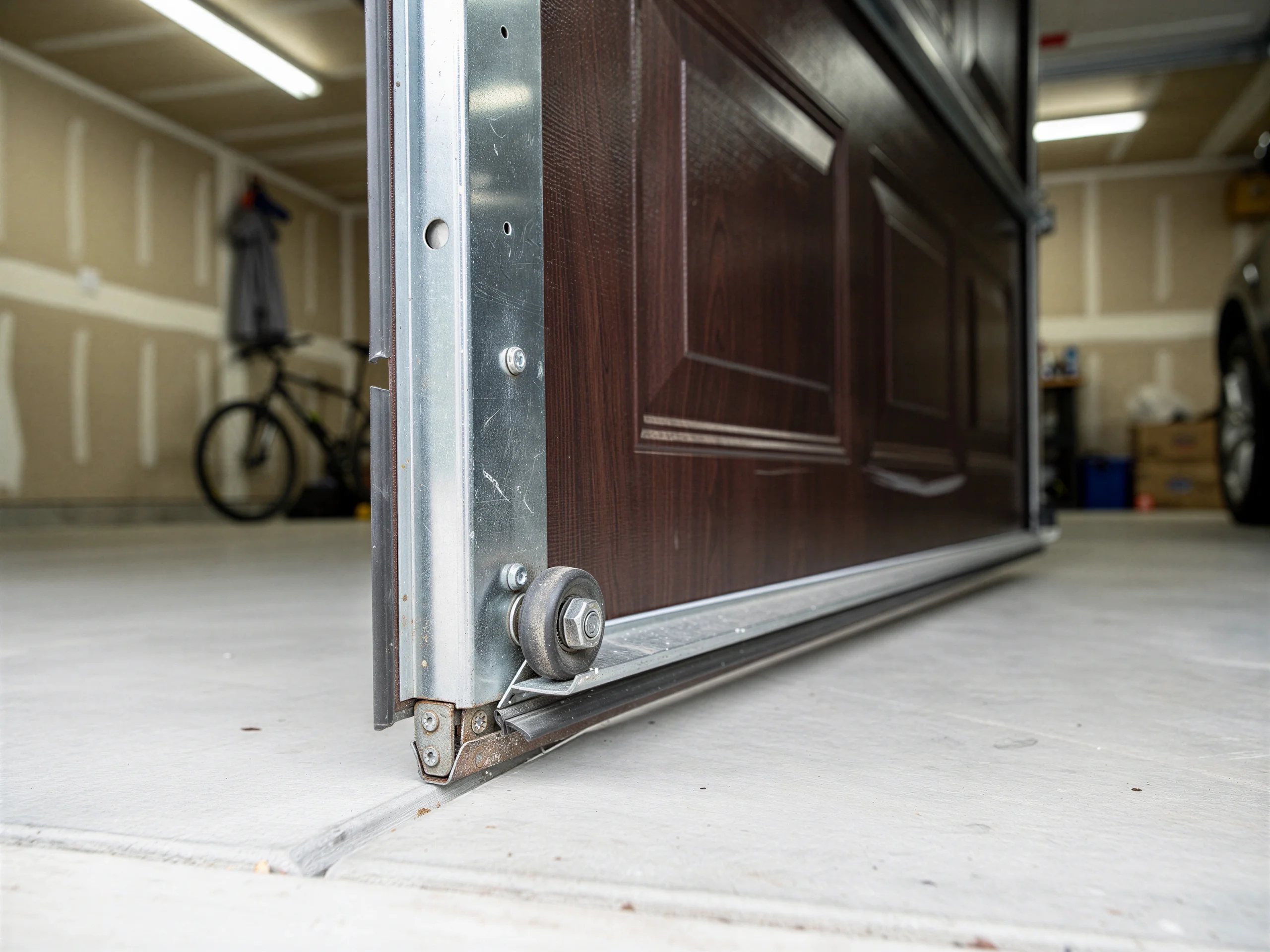
The job goes wrong when the track itself is bent from years of rollers dragging through it, and nobody catches that until the new rollers are in and making the exact same noise.
On houses from this era, the track brackets are often original too, loosened by decades of vibration, and tightening them is part of the job whether it was quoted or not.
Another spot it goes sideways: a door that's already had one incomplete repair, like a single roller swapped years ago instead of the full set, is left running mismatched hardware. We check for that before we touch anything, because replacing four rollers on a door that needs eight doesn't fix the sound.
The repair
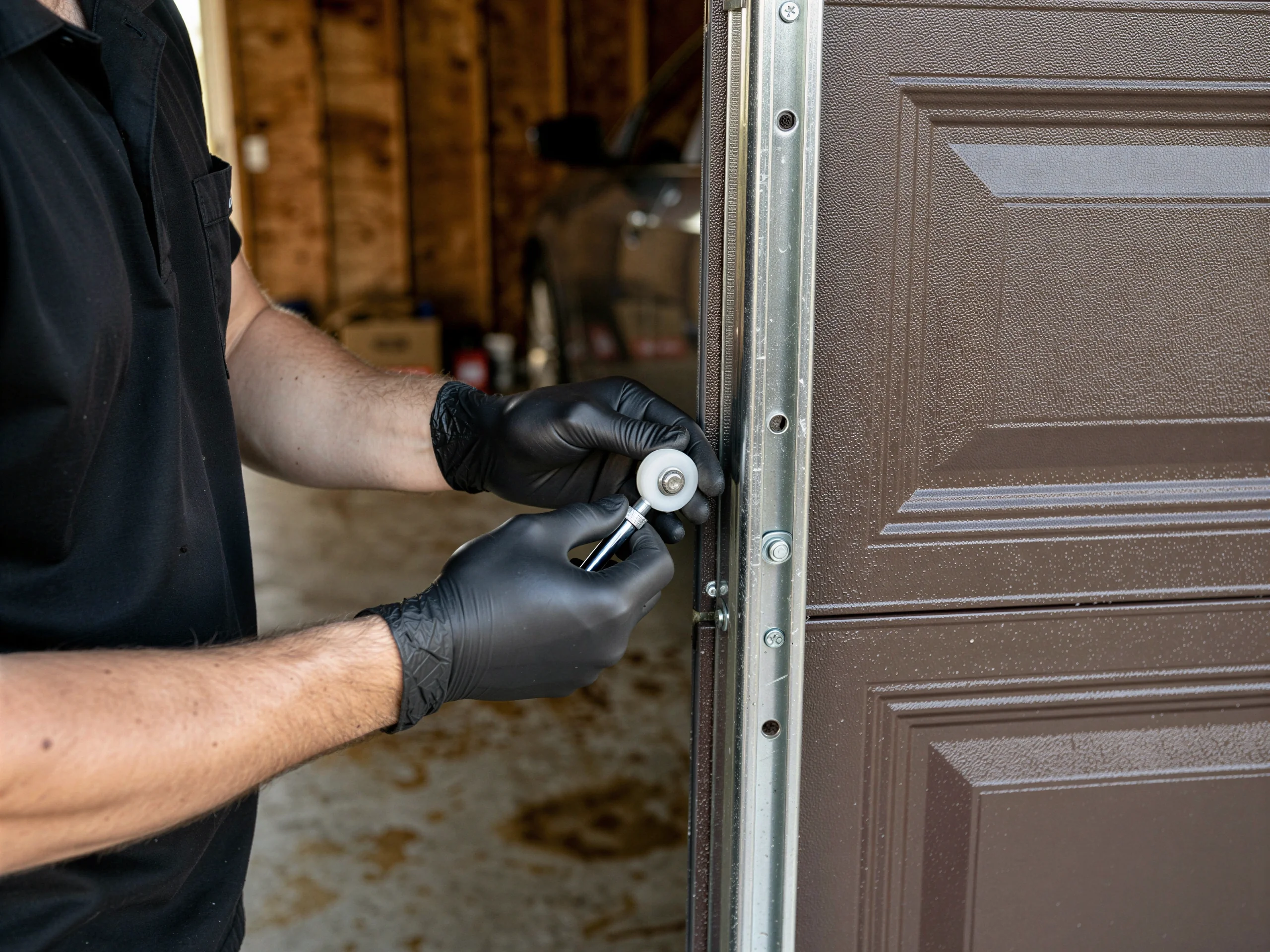
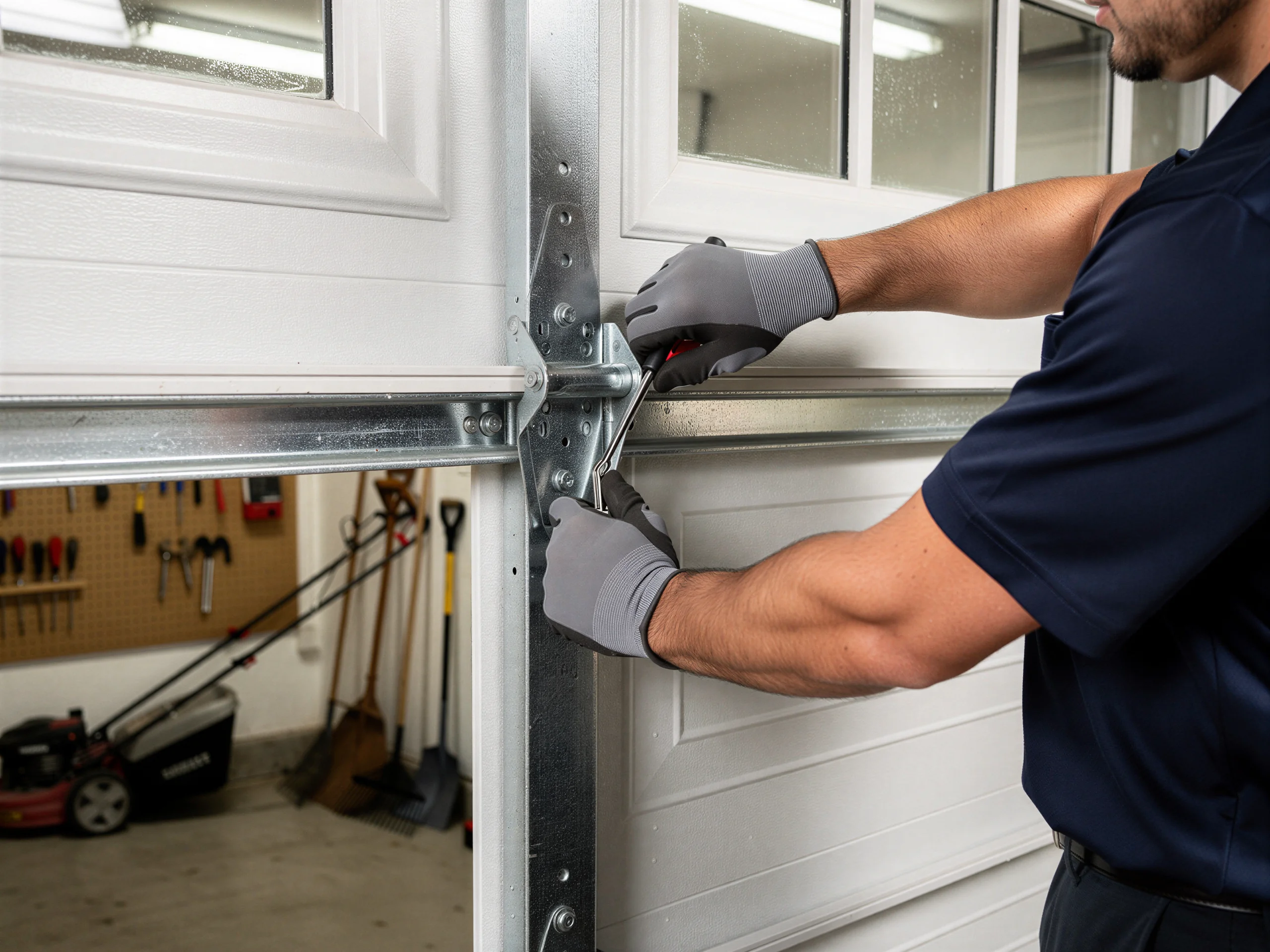
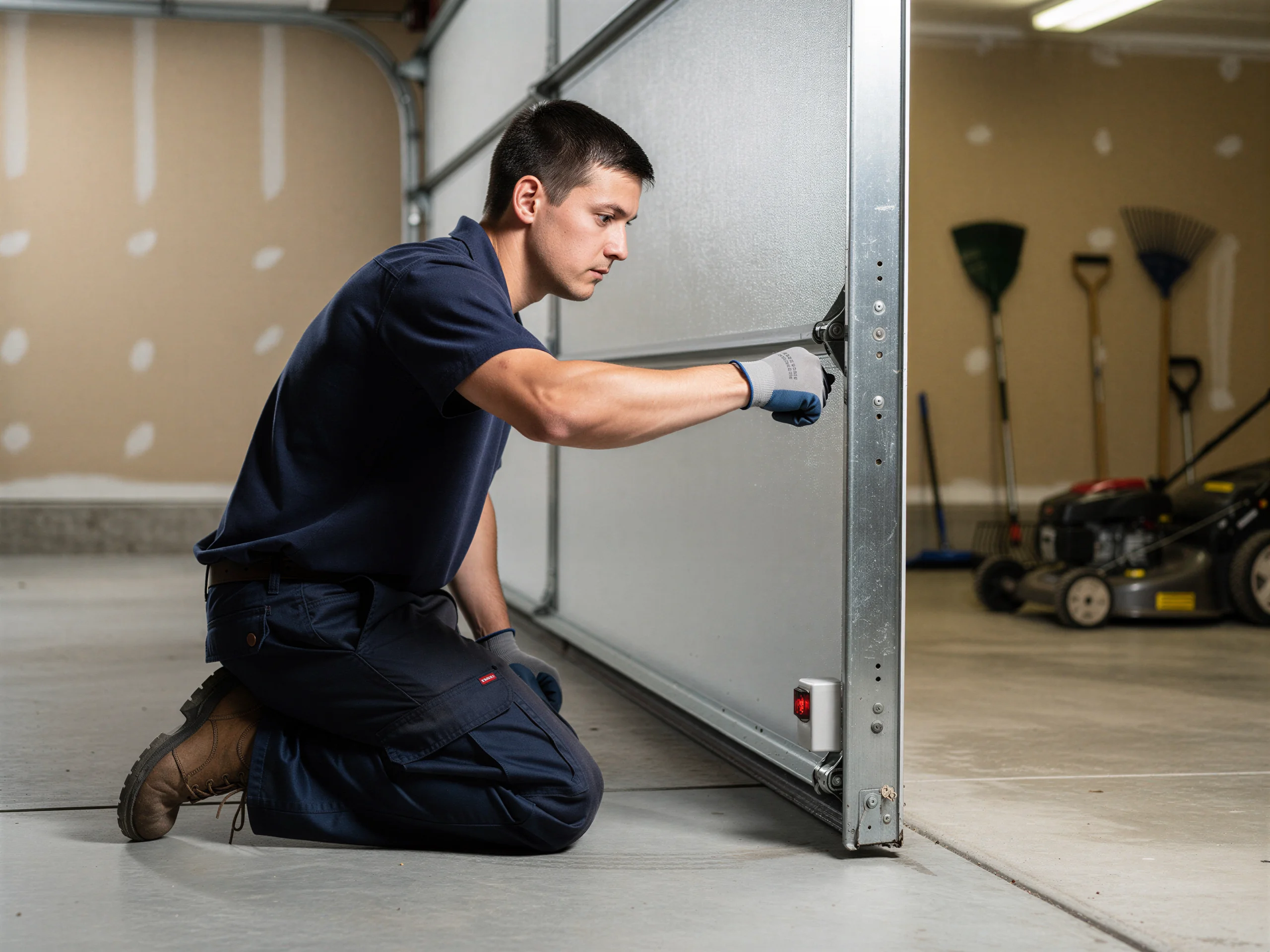
We pull the door down, check the track alignment on both sides, and look at every roller stem and bearing, not just the ones that sound bad. On a 1959-era door, we're usually replacing the full set rather than patching in a few, since the rest are close behind on wear. If the track is bent, we straighten or replace that section before the new rollers go in - skipping that step is the single most common reason a roller job doesn't hold. We also check the hinges and the opener's travel limits, since worn rollers often mask a hinge or spring problem that's been there longer. If the springs are shot too, that's a separate conversation, and we'll say so rather than bundle it in.
Questions
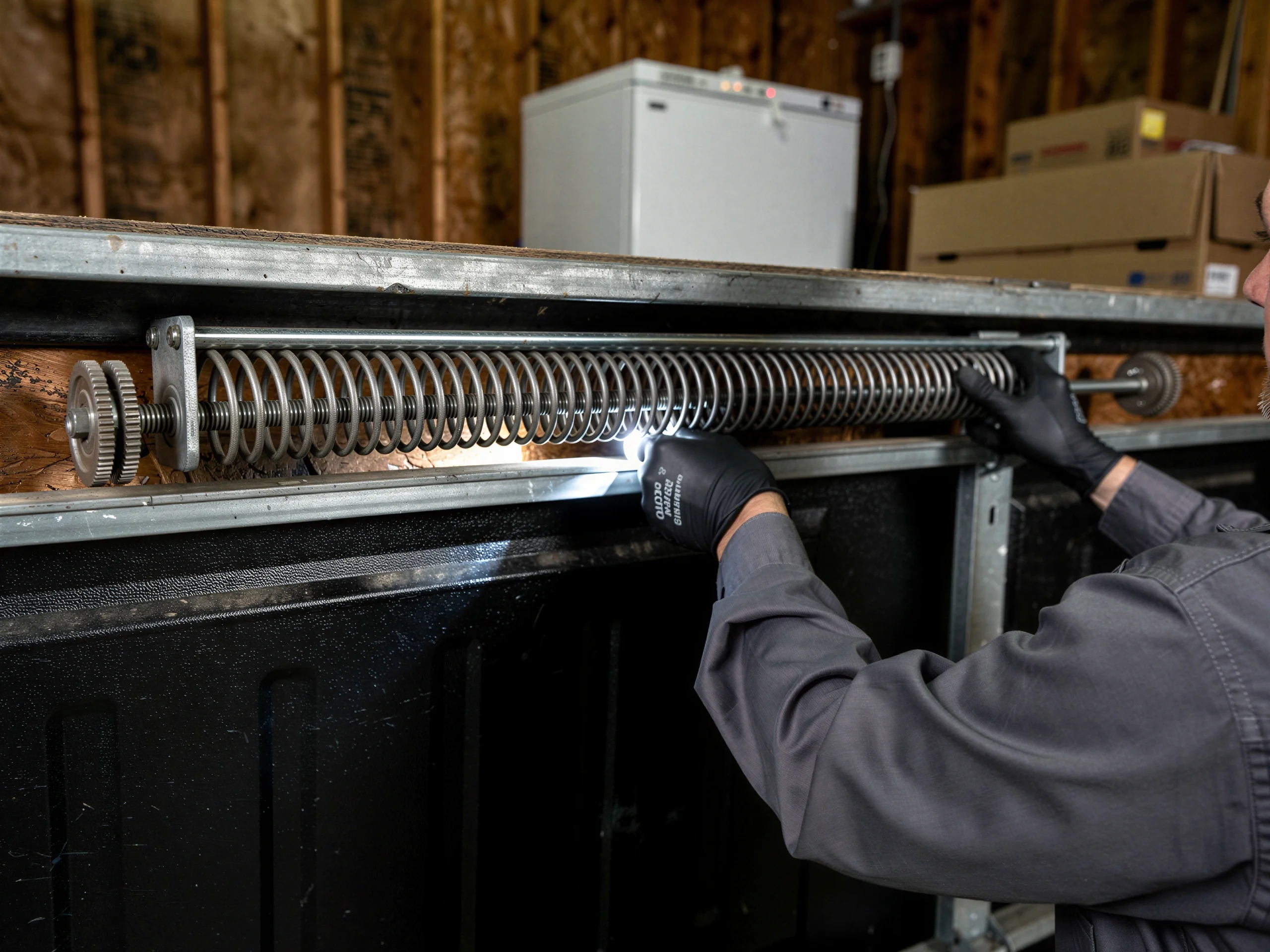
Rollers usually sound like grinding or popping as the door moves, and the door still opens under its own power, just roughly. A spring problem shows up differently - the door feels heavy, won't stay up on its own, or the opener strains and stalls. If the door is hard to lift by hand with the opener disconnected, that's a spring issue, not a roller one.
On a door this age, we usually don't recommend it. If four rollers are worn enough to grind, the other four aren't far behind, and replacing half the set often means a return call within a year. We'll look at all of them and tell you honestly if a partial swap makes sense for your door.
Not much. The mild temperate climate across this area doesn't put the kind of stress on hardware that freeze-thaw cycles do elsewhere. Wear here comes mostly from age and use - steel rollers on steel track from a 1959-era door simply run their course after decades of daily cycles.
Explore more
Ready when you are
Alameda Garage Door Pros repairs and installs garage doors, springs and openers in Alameda, CA and the surrounding area.