Serving Alameda, CA & nearby(510) 229-3331
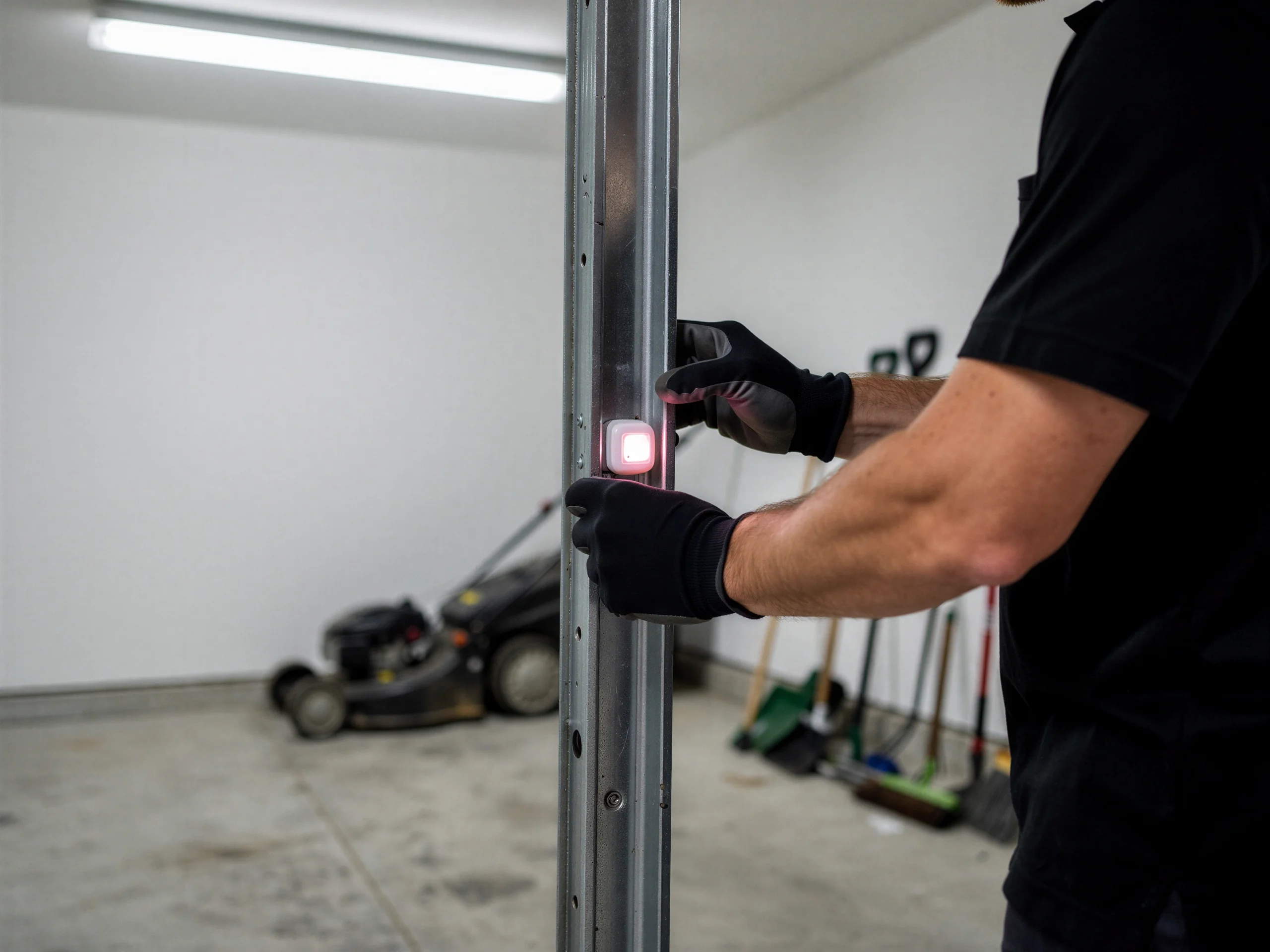
A technician in black gloves installs a white light switch on a gray wall.

Alameda, CA

Garage Door Opener Installation, Done Right for Alameda's Housing Stock

Opener install and replacement for Alameda's older housing stock. We explain why original openers fail here and what a proper retrofit involves.

Serving Alameda, CABackground-checked techsHonest, upfront pricingFast local response
1960s-70s
Half-HP openers, original rail
50+ yrs
Wearing gears and chain
172,438
Owner-occupied houses served
Mild climate
Hides a slowly failing opener

Symptoms

The Symptom

The wall button does nothing, or the opener hums and the door doesn't move, or the remote only works if you stand right under it.

Chain slipping off sprocket

Sometimes it's worse: the chain rattles, slips off the sprocket, and the trolley just sits there while the motor spins. On a lot of the houses we get called to, this isn't a one-off glitch. It's an opener that's been running since the house was built or remodeled, mounted on a rail bolted to framing that predates any of the safety-sensor or auto-reverse standards that came along later.

Original openers still running

Most of the housing stock in this service area went up between 1938 and 2005, with the bulk of it dating to the 1960s and 70s - F1, F2. That means a huge number of garages still have the original header bracket, the original rail pitch, sometimes the original half-horsepower motor running a door it was never sized for.

Strained, limping unit

When that unit finally gives out, it doesn't always fail cleanly. It strains, it strips a gear, it keeps limping for months before it stops. If your opener is cycling slow, reversing for no reason, or needs three tries to close, that's the symptom - not a fluke, a unit at the end of its service life.

Booking

How to Book

Call or use the contact page to set up a visit. Tell us the symptom - won't close, won't respond to the remote, grinding noise, whatever you're seeing - and whether the door itself still moves fine by hand with the opener disconnected.

  1. Opener or spring job

    That one detail matters: it tells us up front whether this is an opener job or a door and spring job, which changes what we bring on the truck. We'll ask the rough age of the house and opener if you know it, since that lines up with what we typically find in homes from this era.

  2. Inspection before recommending

    From there we schedule the visit, look at the rail, the header mount, the wiring, and the door's weight and balance before we recommend a specific opener rather than just swapping in whatever's on the shelf.

  3. No sight-unseen model quotes

    We don't quote an opener model over the phone sight unseen - too many of these garages have a quirk in the mounting or wiring that only shows up in person.

Local causes

Why This Fails Locally

Two things line up here that you don't get everywhere. First, the age of the housing stock: a door and opener installed when a house went up in the 1960s or 70s has had fifty-plus years to wear out gears, dry out lubrication, and stretch the chain or belt past spec - F1, F2. Second, the mild temperate climate actually hides the problem rather than causing it - F3. In places with hard freezes or heavy storm seasons, an opener failure often gets blamed on weather and people notice it right away. Here, without the ice or the wind events, a slowly failing opener just gets quieter about it. The motor runs a little hotter each cycle, the travel limits drift, and nobody notices until the day it won't open at all. Across a service area with 172,438 owner-occupied houses, a lot of them original mid-century builds, that adds up to a steady stream of openers failing from plain fatigue rather than any single event - F6. It's not a storm problem. It's a time problem.
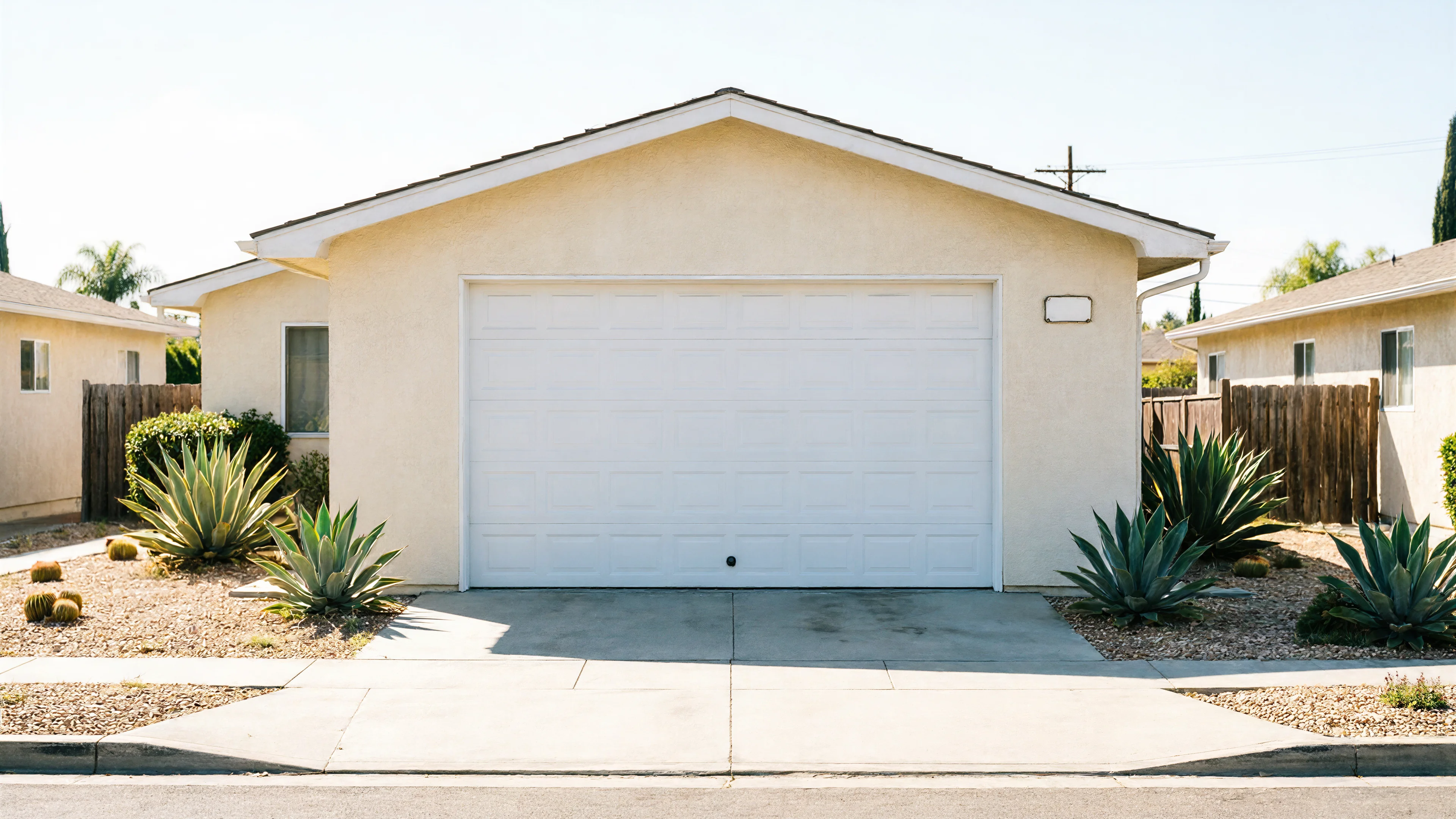
A light yellow house has a white garage door and desert landscaping.

DIY or pro

Can You Do This Yourself

A straightforward opener swap - same bracket, same rail length, standard ceiling clearance - is within reach for a handy homeowner with a helper and an afternoon.

Nonstandard header framing

Where it stops being a weekend project is on the older housing stock common in this service area: header framing that isn't standard dimension lumber, a door that's heavier or lighter than the new opener's rated capacity, or wiring for the wall switch and safety sensors that was never brought up to current code - F1, F2.

Balance burns out motors

Get the balance wrong on an older door and the new opener will fight the spring every cycle, which is exactly how you burn out a second motor in two years instead of fifteen.

No install over bad springs

Our honest limit: we don't install openers on doors with failing springs or cables, because the opener isn't the problem in those cases and masking it with a new motor just moves the failure point. If the door doesn't balance by hand, that gets fixed first.

Questions

Common questions

Can I put a new opener on my original 1960s door?

Usually, but the door needs to be properly balanced and in good repair first. If the springs, cables, or rollers are original to a house from that era, we'll flag it before installing anything, since a new opener run against a failing door setup wears out fast and can be unsafe.

Why did my opener die with no warning?

In this climate, openers rarely fail from a single storm or freeze event. They wear out gradually - gears, chain tension, travel limits - and because there's no extreme weather to force an obvious breaking point, the decline is quiet until the unit just stops.

Do you install openers on garages without existing wiring?

We can, but older houses sometimes need an electrician involved first if there's no outlet near the header or the existing wiring doesn't meet current code. We'll tell you plainly if that's the case rather than rigging something temporary.

Ready when you are

Need a new garage door opener in Alameda?

Alameda Garage Door Pros repairs and installs garage doors, springs and openers in Alameda, CA and the surrounding area.

Call Now(510) 229-3331