Local detail
When Waiting Is Fine
Not every sound is a problem. A door that pops once when it's cold and settles, or a faint rattle in the track on a breezy day, usually isn't telling you anything urgent. Alameda sits in a mild temperate band, so we don't see the hard freeze-thaw cycles that crack hardware elsewhere - a door here doesn't go through the same expansion and contraction a door in a harsher climate would. That matters because a lot of homeowners hear one odd noise and assume the worst. If the door opens and closes at the same speed it always has, closes flush, and the noise doesn't repeat on every single cycle, you can usually wait and just keep an ear on it. What you shouldn't wait on is a noise that's new, that happens every time, or that's gotten louder over a few weeks. That pattern means something is wearing, not just settling.
The area
The Common Mistake
The most common mistake we see is someone spraying WD-40 on a squealing roller and calling it fixed. It quiets things down for a week, sometimes two, and then it's back - often worse. A lot of the housing stock here dates to the 1960s and 70s, with homes across the area built between 1938 and 2005 and a median build year around 1965. That means a large share of doors in Alameda are running on hardware that was never upgraded past what came with the original install - steel rollers instead of nylon, older-style hinges, track that's been reset a few times but not replaced. Spraying lubricant on worn steel-on-steel contact treats the symptom. The roller is still wearing down, the hinge pin is still loosening, and the noise comes back because the part underneath never changed. If a noise keeps returning after you've lubricated it twice, that's the part telling you it's done, not a hint that you used the wrong oil.
What we find
What Is Going On
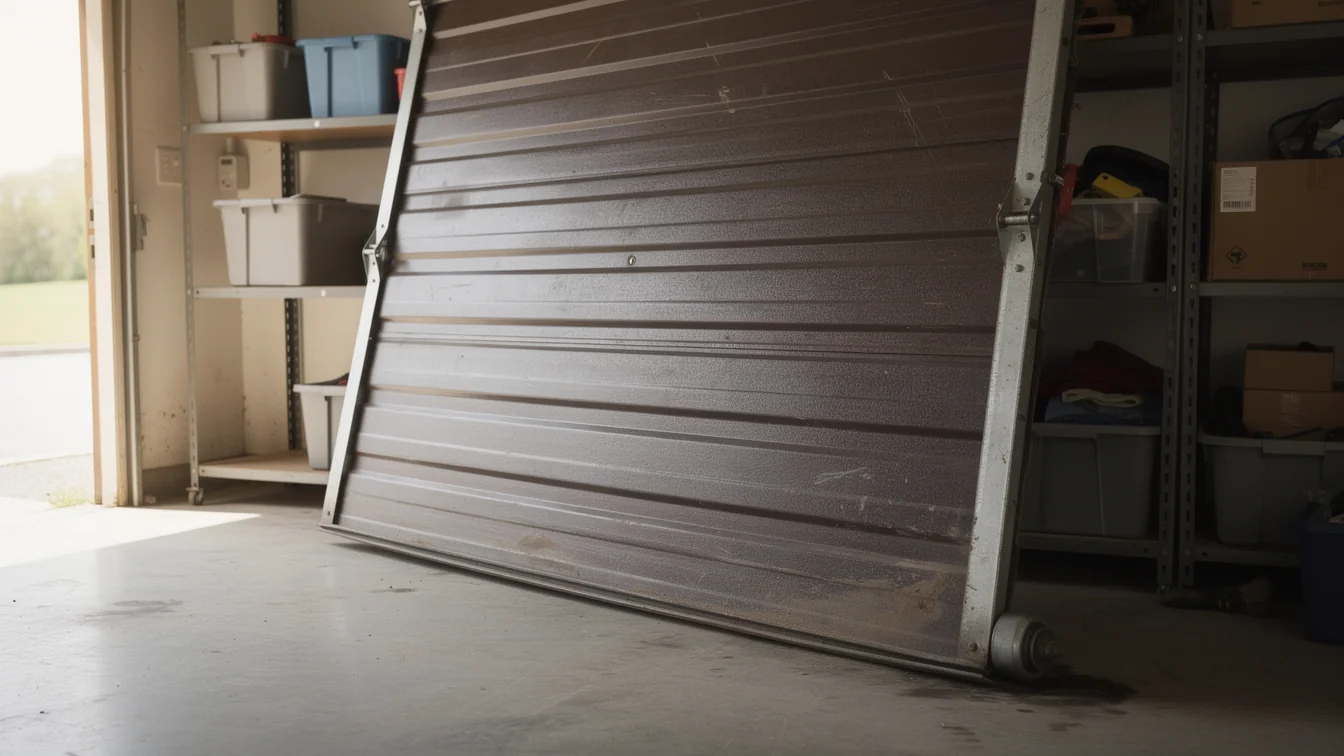
A grinding or growling sound usually means a roller bearing is going, and on the older hardware common in homes built in that 1960s-70s window, replacement rollers are often the fix rather than a full track job. A sharp bang, usually once, is almost always a spring - and that's not a noise to keep living with. A rhythmic thump that matches the door's travel points to a bent section of track or a panel that's come slightly out of alignment with its roller. A metallic ping right as the door starts or stops is often the opener's drive gear or chain, not the door itself. None of these are a guess you should make from the sound alone, but knowing which family of part is likely involved means you're not paying to have someone diagnose from scratch every time.
How we work
What the Weather Here Does to It
Alameda's climate is mild - we don't get the deep cold that seizes up hardware or the extreme heat that warps panels, so weather isn't usually what's causing a new noise here. That's actually useful information: if your door starts making noise and it's not winter and nothing's changed outside, the cause is almost always wear, not temperature. In harsher climates, a sudden squeal might be chalked up to a cold snap and ignored until spring. Here, that excuse doesn't really hold. A new noise in a mild climate is the hardware itself asking for attention, not the weather putting stress on it temporarily. That's one honest limitation worth naming: we can tell you what a noise probably means, but we can't diagnose torque, alignment, or a specific part from a description over the phone. Some of that needs eyes on the door.
Talk to a local pro
Garage door trouble in Alameda?
Same-day service with honest, upfront quotes.