Local detail
When Waiting Is Fine
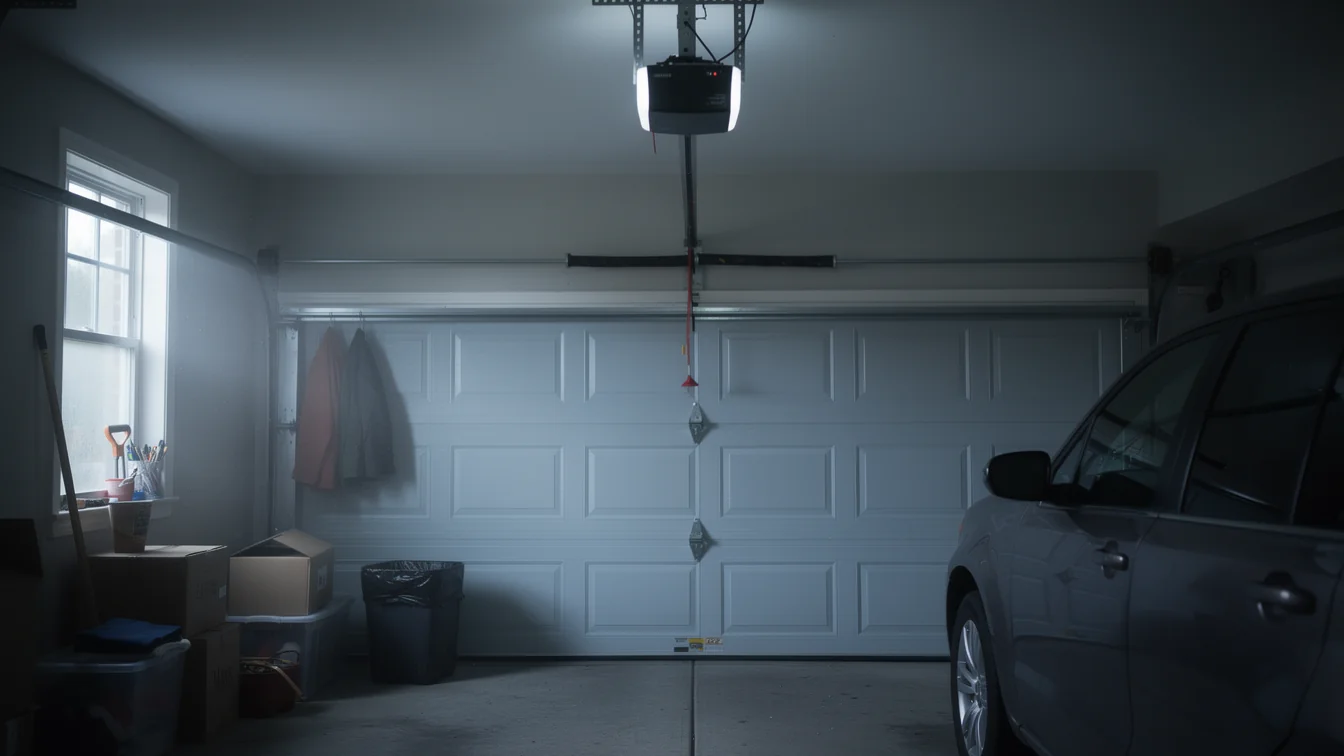
Most of the time, a dead opener after a power cut is not an emergency. If your door won't budge from the wall button or remote, check whether the outlet the opener plugs into has power at all before you call anyone. A lot of Alameda garages built in that 1938 to 2005 range, with a median build year around 1965, still run on a single outlet wired decades ago, and that outlet can trip or fail on its own well before the rest of the house does.
If the power comes back and the opener still won't respond, pull the manual release cord, lift the door by hand to confirm the springs and cables are fine, and leave it in manual mode overnight if you need to. There is no reason to force a motor that just lost its brain. A short outage that resets your opener's logic board is common and usually clears itself once power is stable again for a few minutes. Save the service call for when the door won't move by hand either, or when the opener trips the breaker every time you plug it back in. That second case points to a wiring problem older than the opener itself, which is worth having looked at before you replace anything.
The area
The Common Mistake
The mistake we see most in this area is homeowners replacing the opener motor when the actual problem is the house wiring behind it. With housing stock running 1960s and 70s across most of the named areas here, a lot of garages were never updated past their original circuit, and an opener drawing more current than that circuit was built for will drop out under the exact conditions a power cut creates: a brief surge or sag as the grid recovers.
Swapping in a new opener on the same tired outlet just buys you the same failure again in a year or two. Before you spend money on a new unit, it's worth confirming the circuit itself can carry a modern opener's draw, especially in a garage that hasn't been rewired since the house was built. We don't do electrical panel work ourselves, so if the circuit is the problem, that's a call to an electrician first, opener second.
What we find
What Is Going On
When an opener acts up right after a power cut, it's almost always one of three things: the logic board needs a reset, the backup battery (if the unit has one) is too old to hold a charge through the gap, or the outlet and breaker feeding it are original to a house built decades ago and weren't sized for today's opener motors. Given that a lot of the garages in this part of the Bay were wired when the house went up sometime between 1938 and 2005, with most clustering in the 1960s and 70s, that third option comes up more than people expect.
If your opener has a battery backup and the door still lifts fine on battery during an outage, the problem isn't power delivery at all; it's the battery itself needing replacement. If the door won't move even on battery, check the manual release and the springs before assuming the motor is dead. A motor that hums but doesn't turn the shaft is a different repair than a motor that's silent.
How we work
What the Weather Here Does to It
Alameda sits in a mild temperate band, not the kind of place where an opener motor gets stressed by freeze-thaw cycles or triple-digit heat the way it would inland. That's actually useful information when you're troubleshooting: if your opener is failing, it's much more likely to be age, wiring, or a worn battery than heat-related motor strain, since the climate here just doesn't put that kind of load on the equipment.
What the mild climate doesn't protect you from is the age of the house itself. A door and opener installed when a house built in the 1960s or 70s first went up has had fifty-plus years to wear down its rollers, cables, and the opener's internal gears, regardless of how gentle the weather's been. Power cuts tend to be the moment all of that catches up at once, because a reset exposes whatever was already marginal. The outage doesn't break the opener. It just finds the weak point.
Talk to a local pro
Garage door trouble in Alameda?
Same-day service with honest, upfront quotes.