Local detail
When Waiting Is Fine
Most houses in this service area went up between 1938 and 2005, with the median build year sitting at 1965. That matters because a lot of the original garage hardware from that era was built heavier than what ships standard today. If your door still rolls smooth, the torsion spring hasn't snapped, and the opener still pulls without straining, there's no reason to replace just because the door looks dated. A worn panel with a dent or two isn't a failure - it's cosmetic. We'd rather tell you to run it another five years than sell you a door you don't need yet. Across the 53 named areas that make up this region, a huge share of garages are still running original or close-to-original hardware from that 1960s-70s build window, and plenty of it is fine. The honest line is this: replace when something's actually failing - a cracked spring, a track that's bent past adjustment, an opener motor that's gone - not on a schedule. Waiting costs nothing if the door still does its job.
The area
The Common Mistake
The mistake we see most is homeowners buying for the showroom instead of for the garage they actually have. Houses from the 1938-2005 window, especially the 1960s-70s stock that dominates this area, were built with shallower headroom and narrower track clearance than a lot of newer doors assume. A homeowner picks a door online, it ships, and it doesn't clear the opener rail or the ceiling-mounted ductwork that's common in houses from that period. That's a return trip and a delay nobody wants. The second common mistake is paying extra for heavy insulation ratings that don't earn their keep here. Given the mild temperate climate this area sits in, you're not fighting the kind of temperature swing that makes a high R-value door worth the premium in a place with real winters. That money is better spent on a heavier gauge steel or better hardware - rollers, hinges, a stronger torsion spring - than on insulation foam you'll barely notice in daily use. We'll measure your opening and tell you straight if a door you've picked out won't fit before you order it, not after.
What we find
What Is Going On
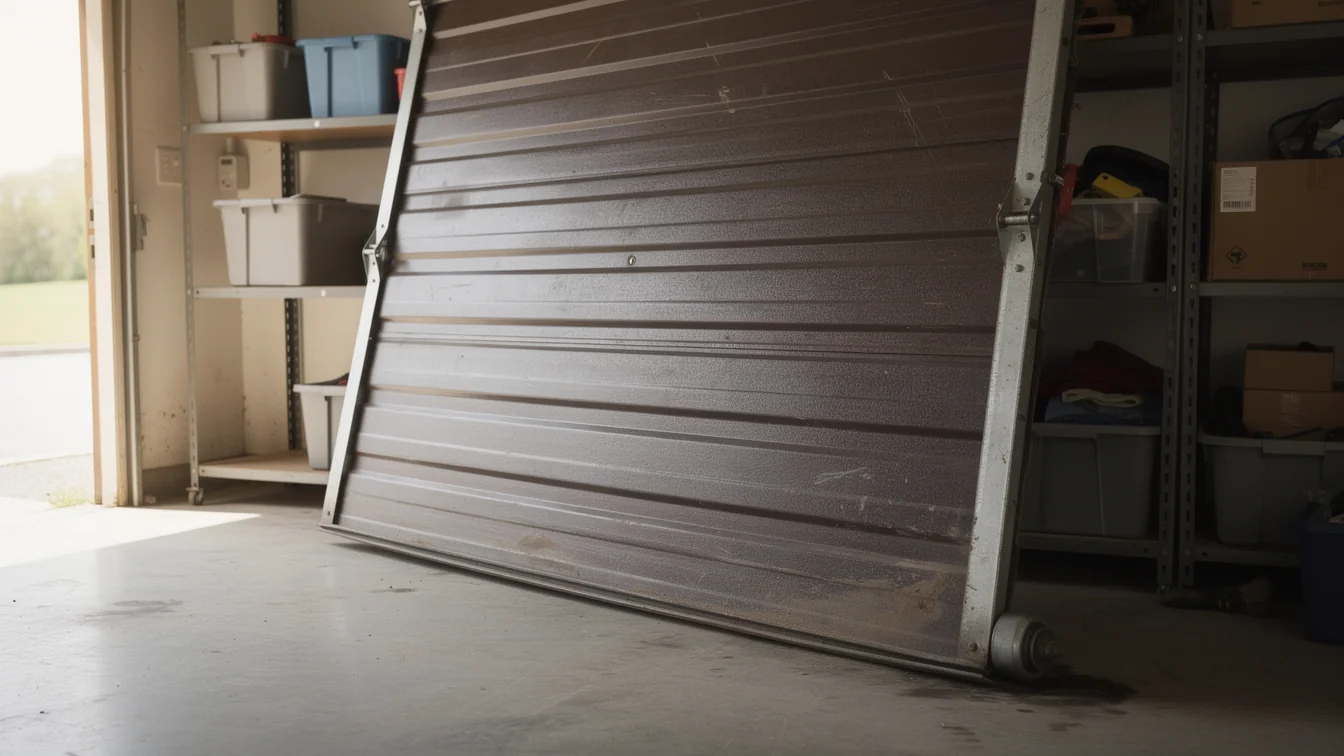
A door built around the median 1965 construction year in this area was made from thinner-gauge steel or solid wood panel, both common for that period, and both age differently than what's sold now. Wood panels swell and shrink with moisture over decades and eventually warp at the seams. Older steel doors, especially the single-panel style standard in 1960s and 1970s construction across this region, don't have the reinforced horizontal ribbing that newer doors use, so they sag in the middle over time - you'll see daylight gaps at the corners before the center ever fails outright. None of that is a weather event. It's just forty-plus years of a garage door doing its job in a house from that build era. With a median household income of $163,199 across the area, cost isn't usually what stops someone from replacing a sagging door - it's just not knowing whether the sag is cosmetic or structural. We check the track alignment and the spring tension before we tell you which one it is.
How we work
What the Weather Here Does to It
The mild temperate climate here is doing less damage to your door than you'd think if you've lived somewhere with real seasons. Steel doesn't expand and contract hard enough in this range to crack welds or pop seams the way it does in places with sharp freeze-thaw cycles. Wood panels aren't fighting the kind of humidity swing that splits grain in a single winter. That's the upside of the climate band this area sits in - doors here tend to fail from age and use, not from weather stress. The honest limitation: we can't tell you a door will last a set number of years just because the climate is easy on it. Hardware wear, how often the door cycles, and the quality of the install still matter more than the weather does. What the mild climate does buy you is a longer window before cosmetic wear turns into a real problem, which is part of why so much original stock from the 1960s and 1970s is still running in this area today.
Talk to a local pro
Garage door trouble in Alameda?
Same-day service with honest, upfront quotes.