
Diagnosing jamb shift
What takes longer is diagnosing whether the track moved because of one bad bracket or because the whole jamb has shifted slightly, which happens more often on houses built before modern seismic bracing standards.
Castro Valley, Alameda
Castro Valley homes built around 1966 carry doors and track hardware from that era. Here's why they jump track and what the fix actually costs.
Local causes
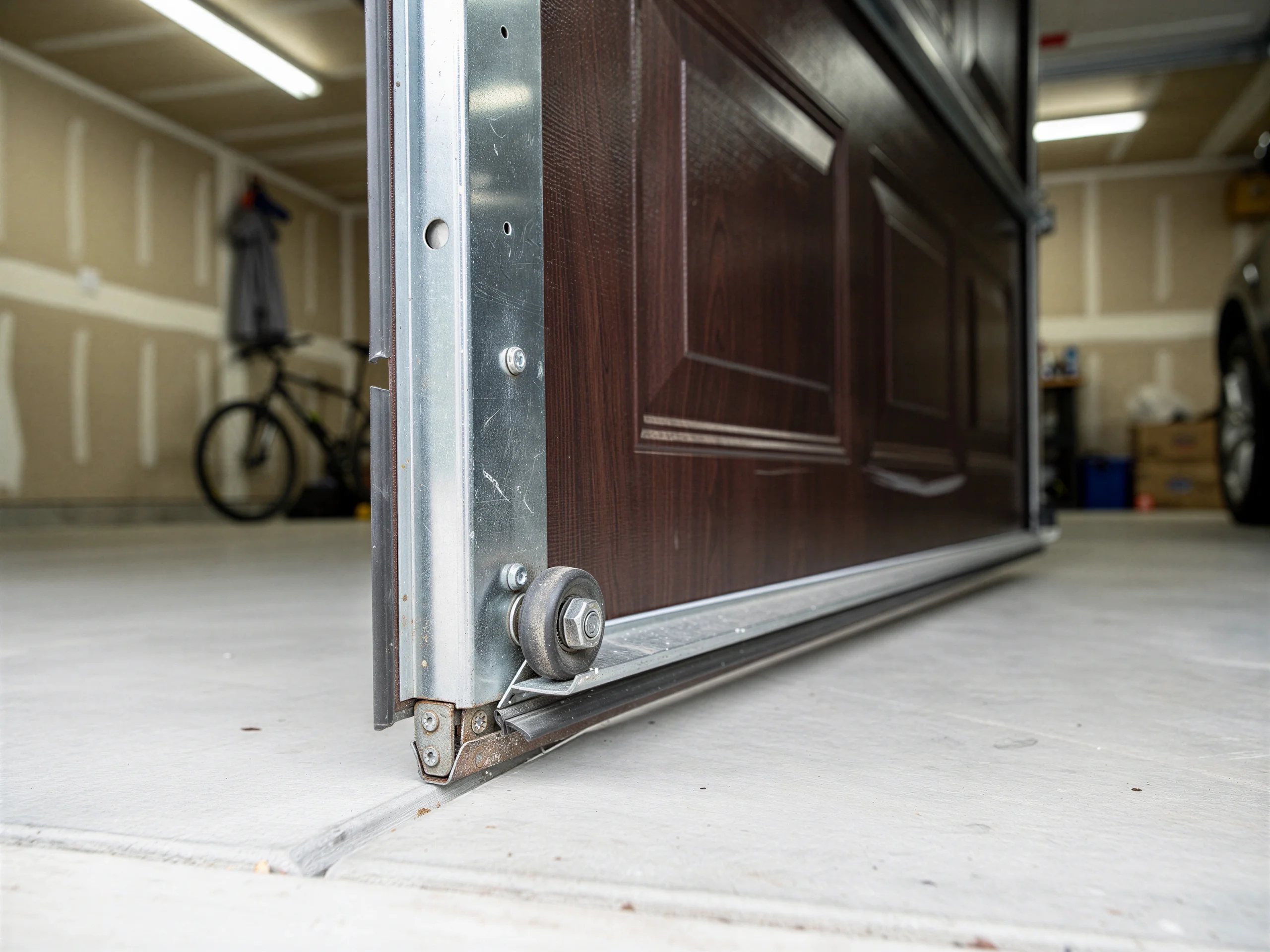
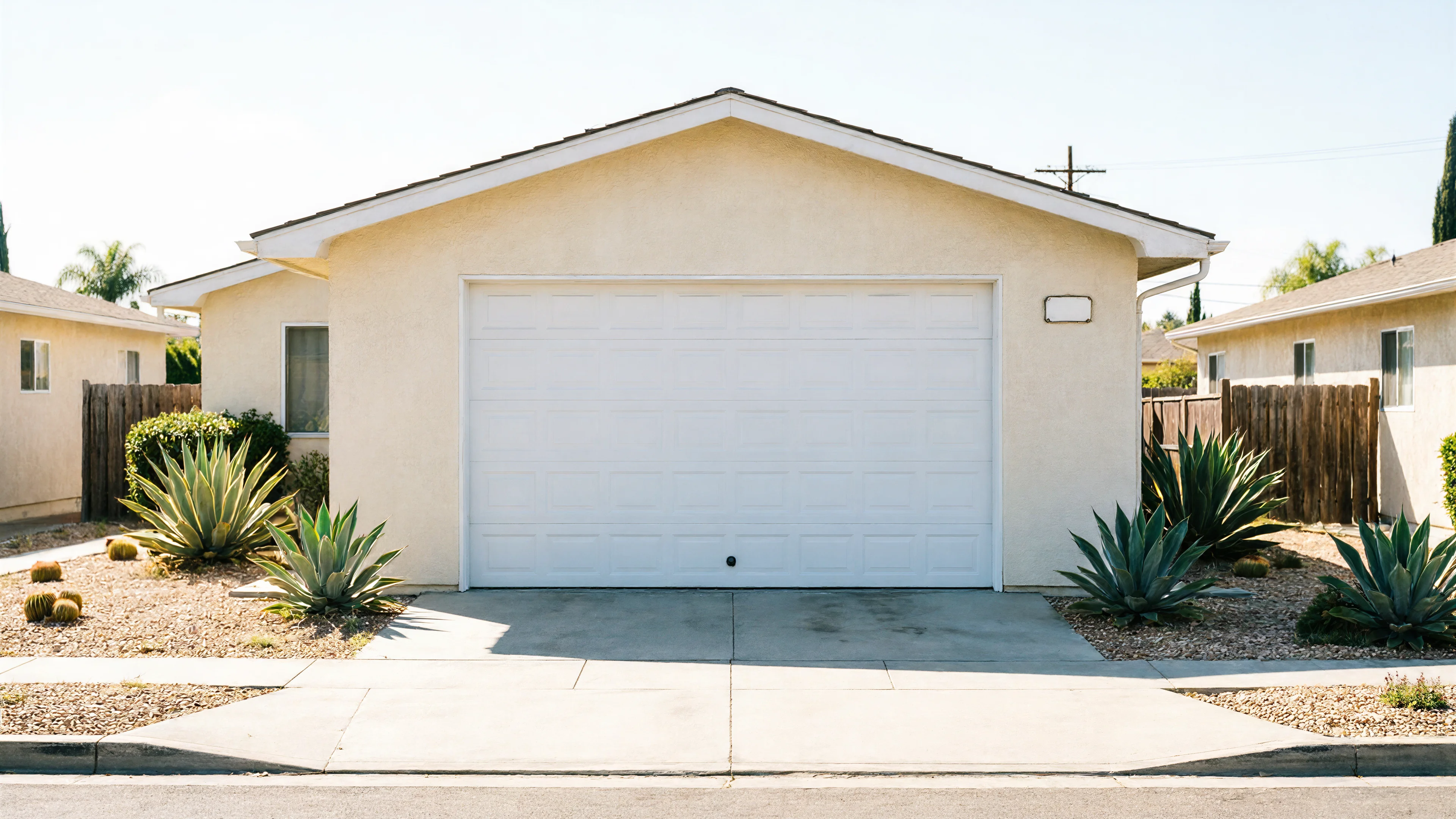
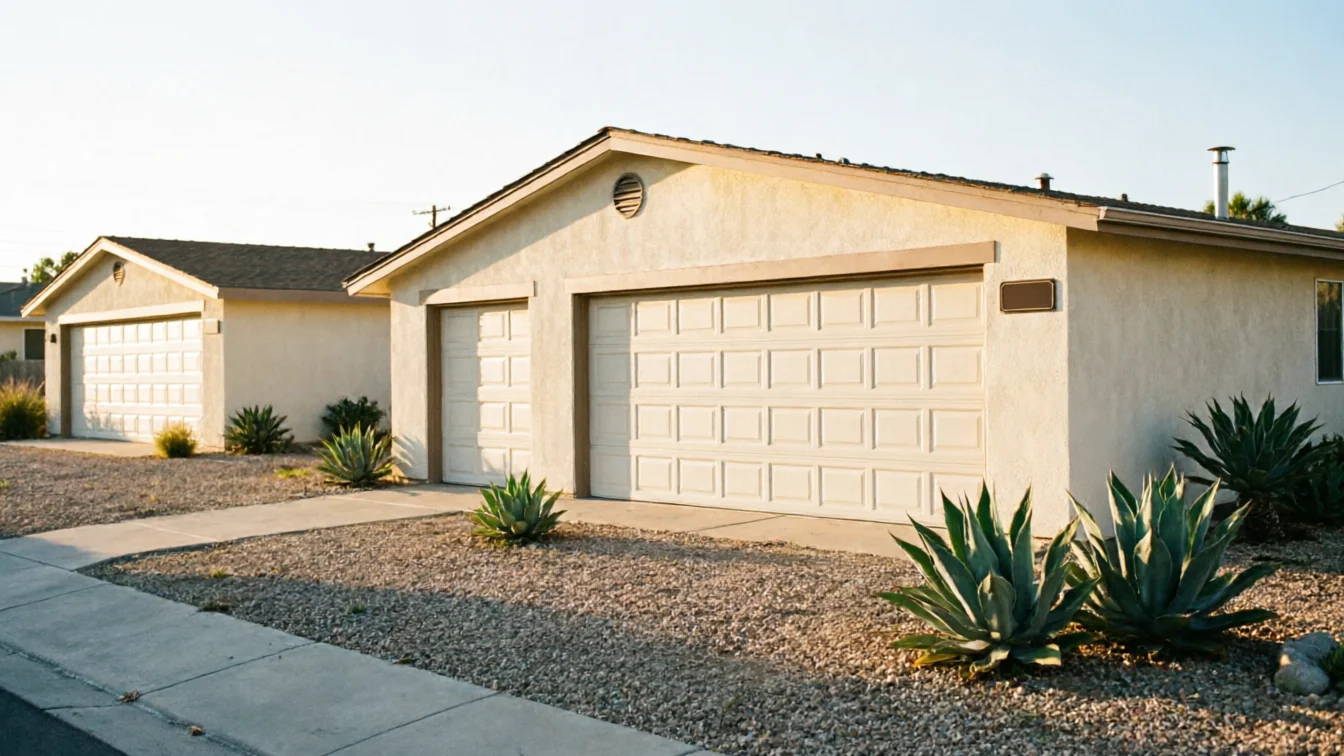
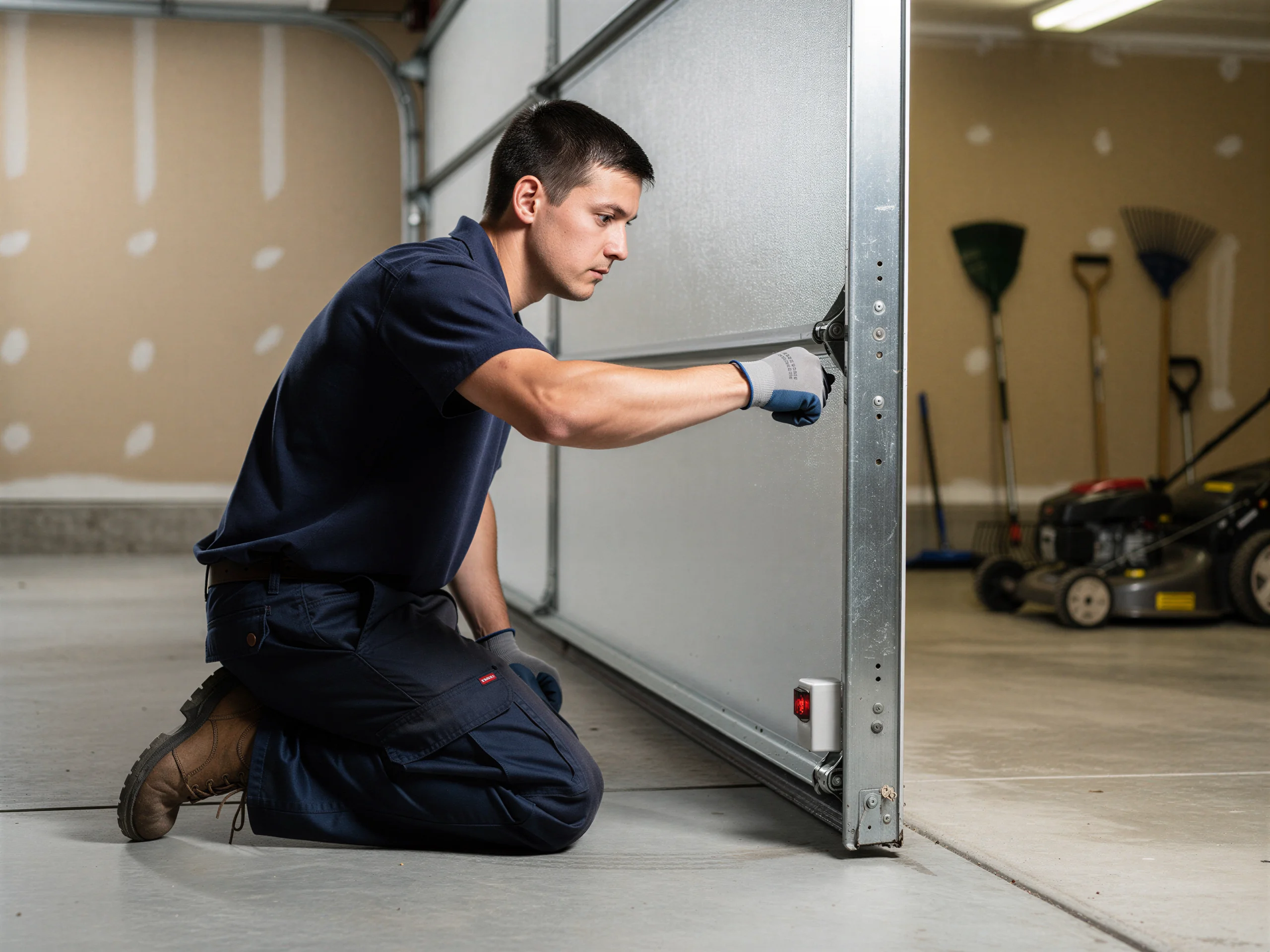
Most garage doors in Castro Valley went up with the house, and the median build year here is 1966 - a decade or so newer than a lot of the East Bay flats but still well inside the 1938-2005 window that covers this whole service area. That means a single-layer steel sectional, often 16x7 for a two-car opening or 9x7 for a one-car, hung on galvanized steel track that was never built with today's roller tolerances in mind. The track brackets from that era are lighter gauge, and over sixty years the lag bolts holding them to the jamb work loose a fraction of a turn at a time. You don't see it happening. You see the door hang up three inches off the floor on one side and know something's wrong. That bent or loose track is the actual mechanical start of most off-track calls out here, not the opener and not the spring, even though people usually blame whichever part makes the most noise when it fails.
Job timing
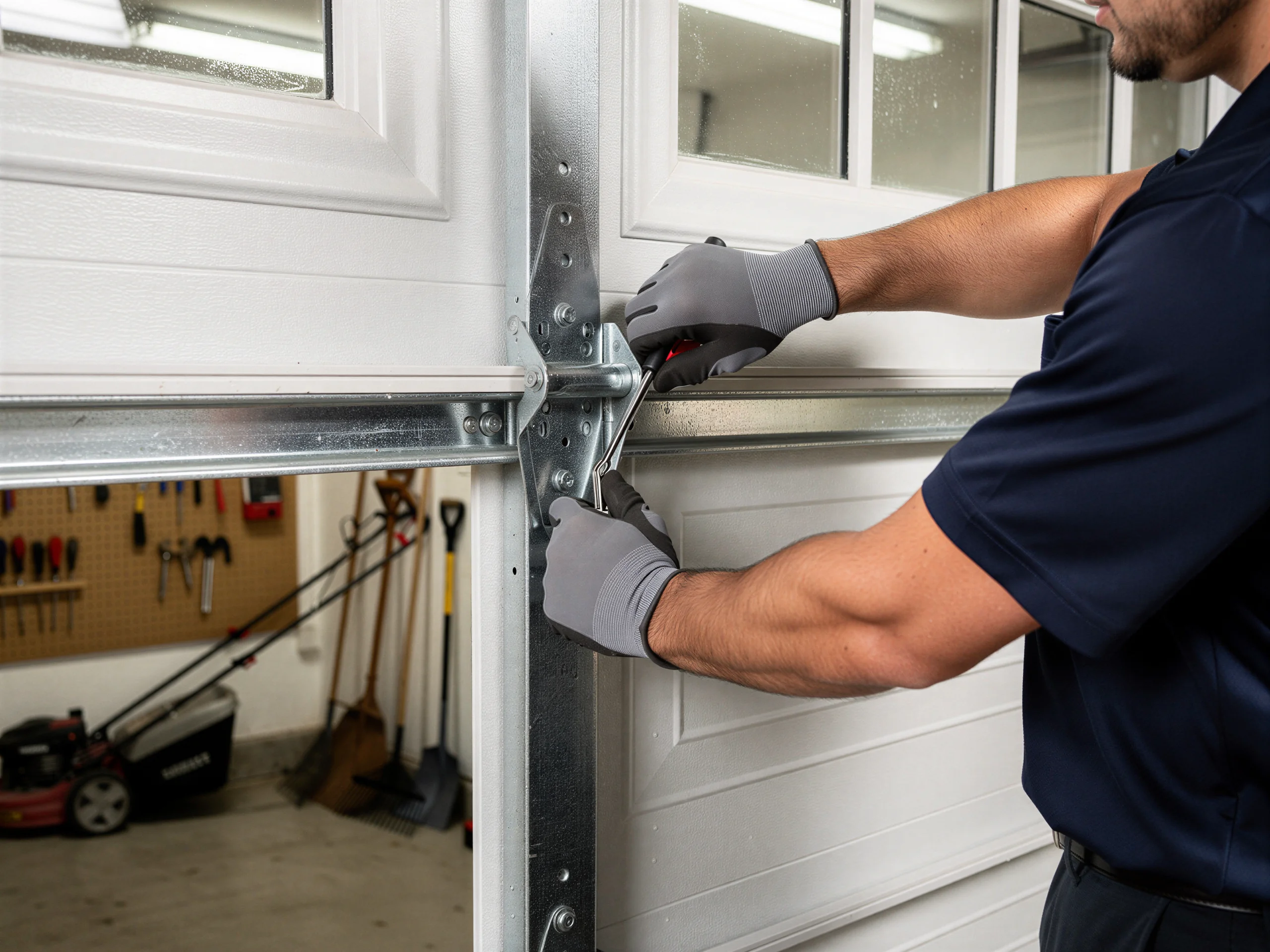
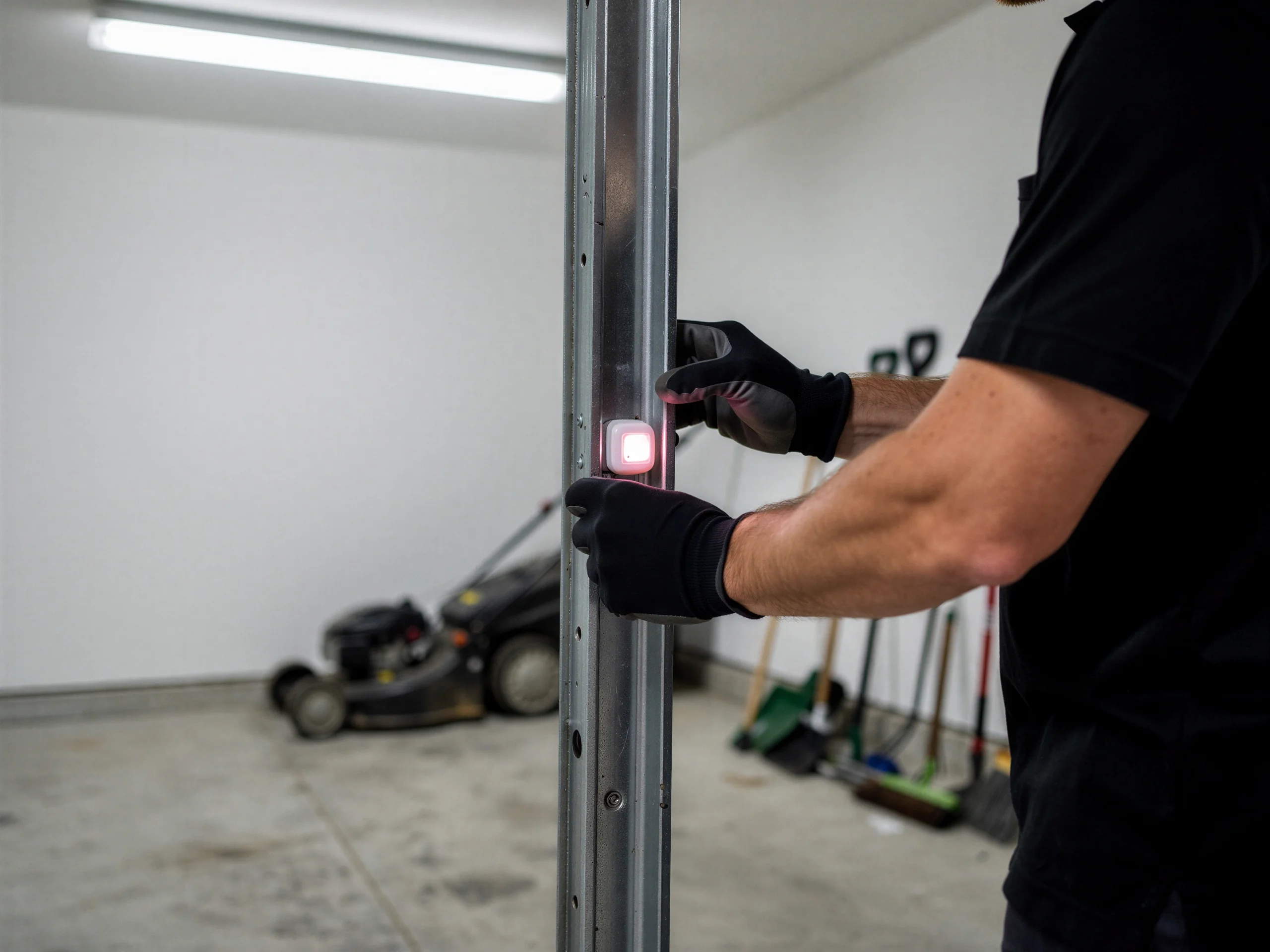
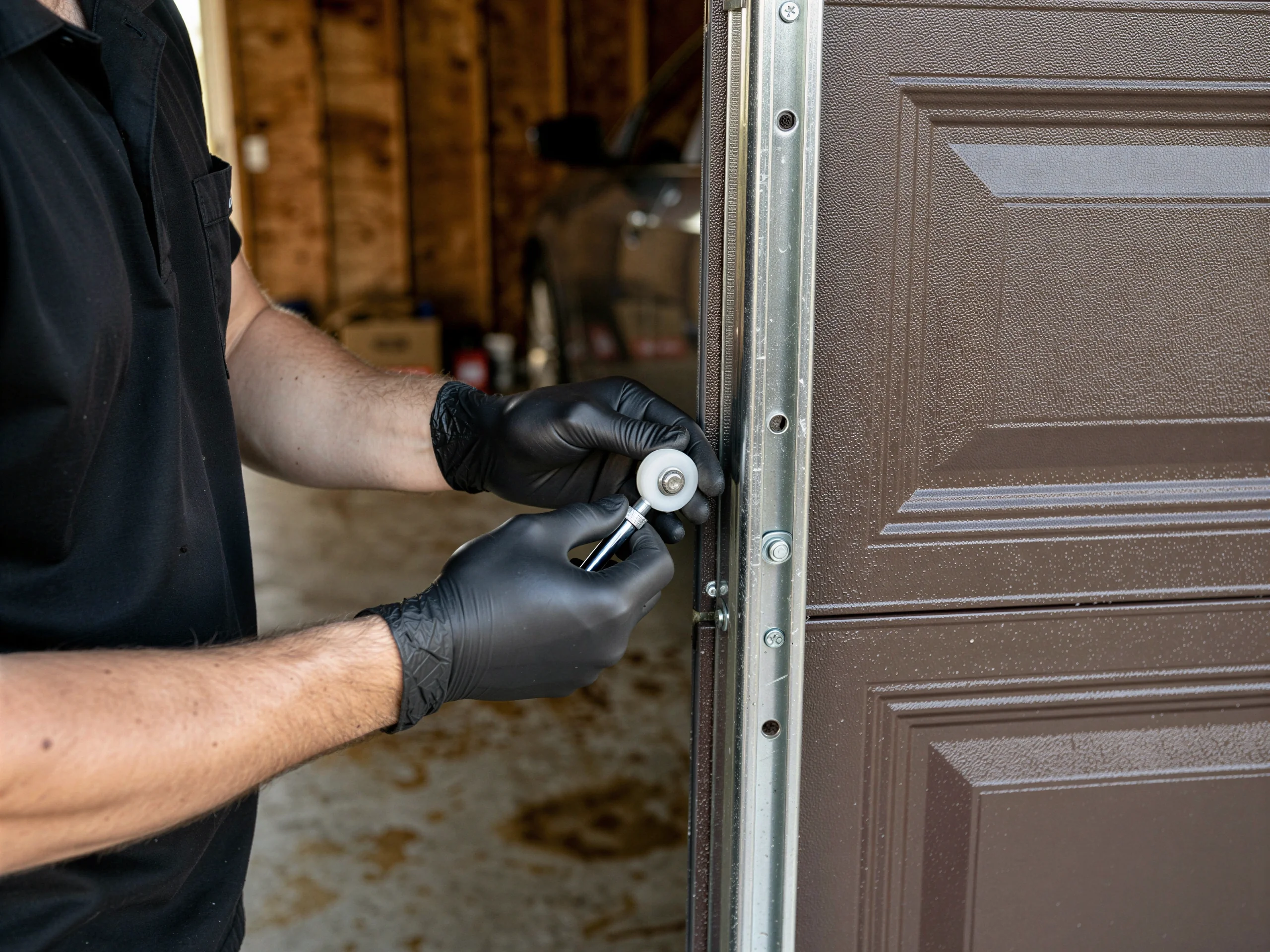
Getting a door back on track on a door this age is usually a straightforward job once we're on site - realigning or replacing a section of bent track, re-anchoring loose brackets, checking the rollers for wear and swapping the ones that are grooved or cracked.
What takes longer is diagnosing whether the track moved because of one bad bracket or because the whole jamb has shifted slightly, which happens more often on houses built before modern seismic bracing standards.
We travel out from Alameda, about 11 miles, so we're not a five-minute walk away - we plan the visit, we don't wing it. If the door needs a part we don't carry on the truck, that adds a return trip, and we'll tell you that up front rather than make you guess.
Symptoms
The classic off-track symptom here is a door that runs smooth for the first foot of travel and then catches, shudders, or drops at an angle - usually the side where the track bracket has backed out of the framing. Sometimes it's quieter than that: the door closes fine but won't open past halfway, because a roller has popped out of the track and is riding the edge of the rail instead of inside it. On the mild coastal climate we get through here, rust isn't usually the driving cause the way it might be somewhere with real winters - F3 covers that - so when we find corrosion on the track or hinges on a 1966-era door, it's more often a sign of a slow water intrusion point at the header than general weather wear, and that's worth mentioning to the homeowner separately from the track fix itself.
Watch-outs
The job gets harder when the door has been forced while off-track - someone keeps hitting the opener button even after it binds, and the motor keeps pulling against a jammed roller.
That stresses the top panel hinges and can crack the stile on an older single-layer steel door, which turns a track repair into a panel or door replacement.
We also run into this on double doors specifically: a 16-foot door off-track on one side puts twisting load on the whole horizontal track assembly, and if the center support bracket has already loosened with age, you can end up needing two new track sections instead of one.
Honest limitation: if the door has been run off-track more than a couple of cycles, we're not going to promise a clean track-only fix until we've had eyes on the panel and the opener's force settings. Sometimes the cheaper call is a new door section, not a rebuilt track.
Pricing
Serving Alameda, CA
We don't have a published price list that applies evenly across every job, because off-track repairs on houses from the 1960s and 70s stock vary with how much the bracket, track, or roller hardware has aged and whether the panel took damage before anyone called. What we can say is that Castro Valley's median household income of $138,069 sits below the wider service area's $163,199, and it's a town of 22,242 households, mostly owner-occupied, where a repair bill matters and nobody wants to pay for parts they don't need. We quote the job after we've seen the track and the bracket condition, not before, and we'll tell you plainly if a patch repair is the wrong call versus a full track replacement.
Questions
On a house from the 1966 era, the usual cause is a loosened track bracket or worn roller, not the opener. Decades of small vibration work the lag bolts in the jamb loose, and once the track shifts even slightly, the roller rides the edge instead of inside the rail and the door hangs up or drops.
We'd rather you didn't force it. Running the opener against a jammed roller is what turns a simple track repair into a cracked panel or bent hinge. Disconnect the opener, leave the door where it sits, and call. It's a safer and usually cheaper fix if it hasn't been forced.
We're based in Alameda, about 11 miles from Castro Valley. We don't keep a branch or crew stationed locally, so we schedule the visit rather than offer a walk-up response - worth knowing if you're comparing us to a shop that's physically closer.
Less than you'd think. The climate through this part of the service area is mild temperate, so rust on track and hinges is less common than it would be in a harder winter climate. When we do find corrosion on an older door, it's usually a sign of a specific water intrusion point rather than general weather wear.
Explore more
Ready when you are
Alameda Garage Door Pros repairs and installs garage doors, springs and openers in Alameda, CA and the surrounding area.