Weather not a delay
The mild climate across this part of the Bay doesn't force us to work around ice or heat the way crews in other regions do, so the weather isn't what slows a job down.
Castro Valley, Alameda
Castro Valley homes built around 1966 still run original extension-spring hardware. We drive out from Alameda to fix the doors that era actually gave you.
Local causes
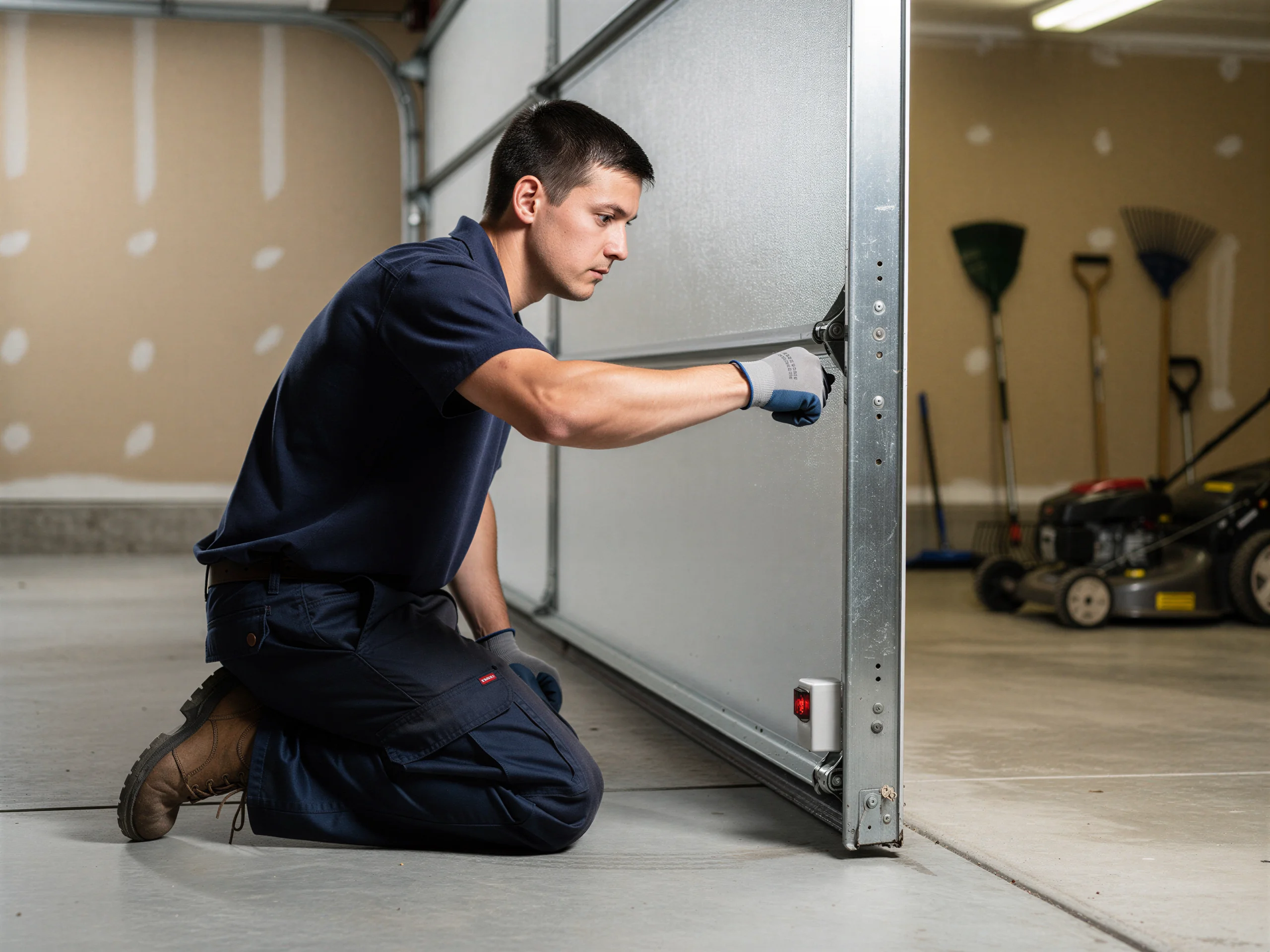
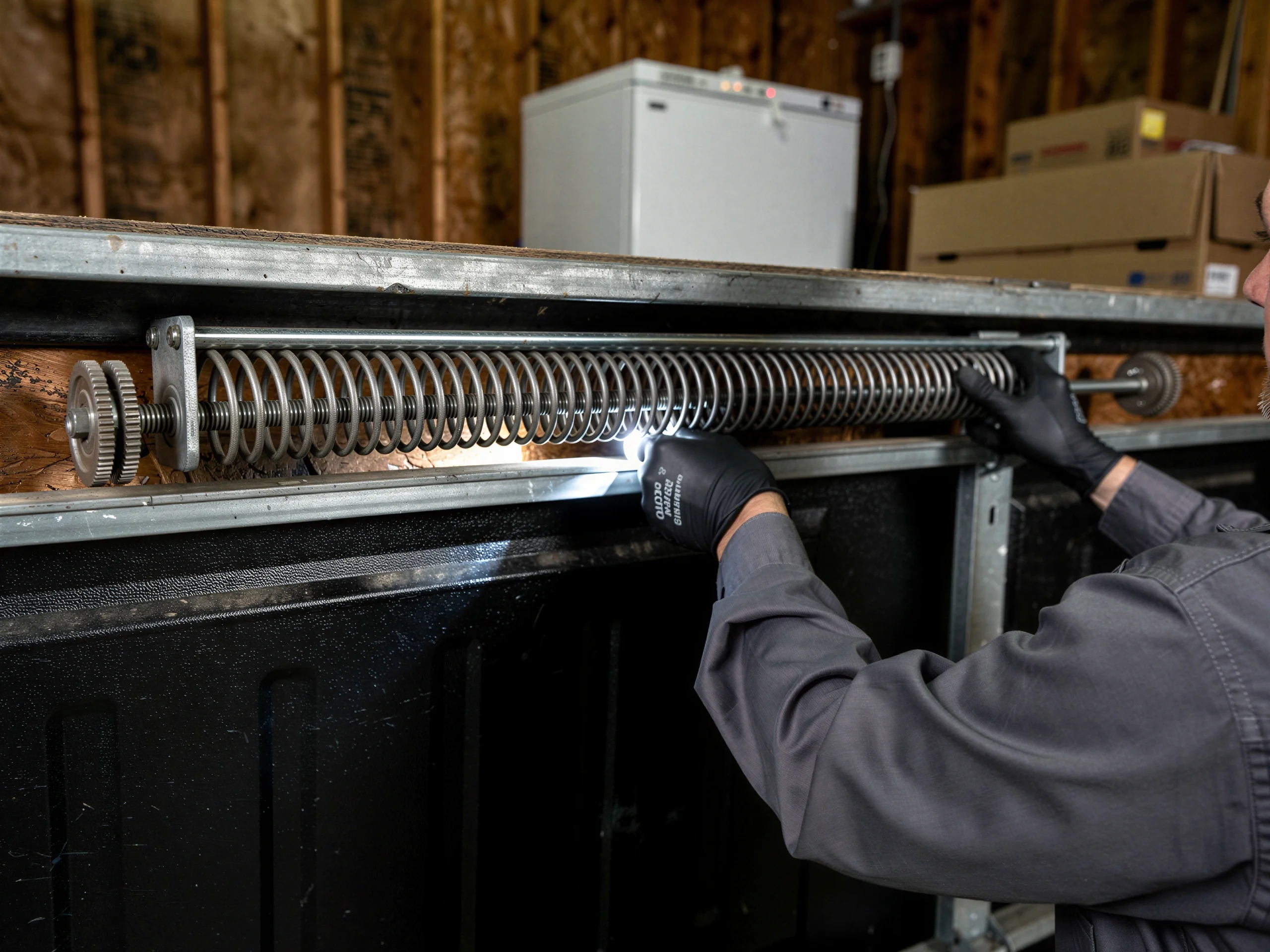
The fault we see most in Castro Valley isn't a broken opener board or a dead sensor. It's extension springs stretched over worn pulleys on a door that's never had a torsion upgrade. That's because the typical house here went up around 1966, right in the middle of the 1960s-70s building wave that shaped most of this part of the service area. Builders in that window used extension-spring systems on steel sectional doors almost everywhere, mounted on brackets bolted into jamb wood that's now nearly sixty years old.
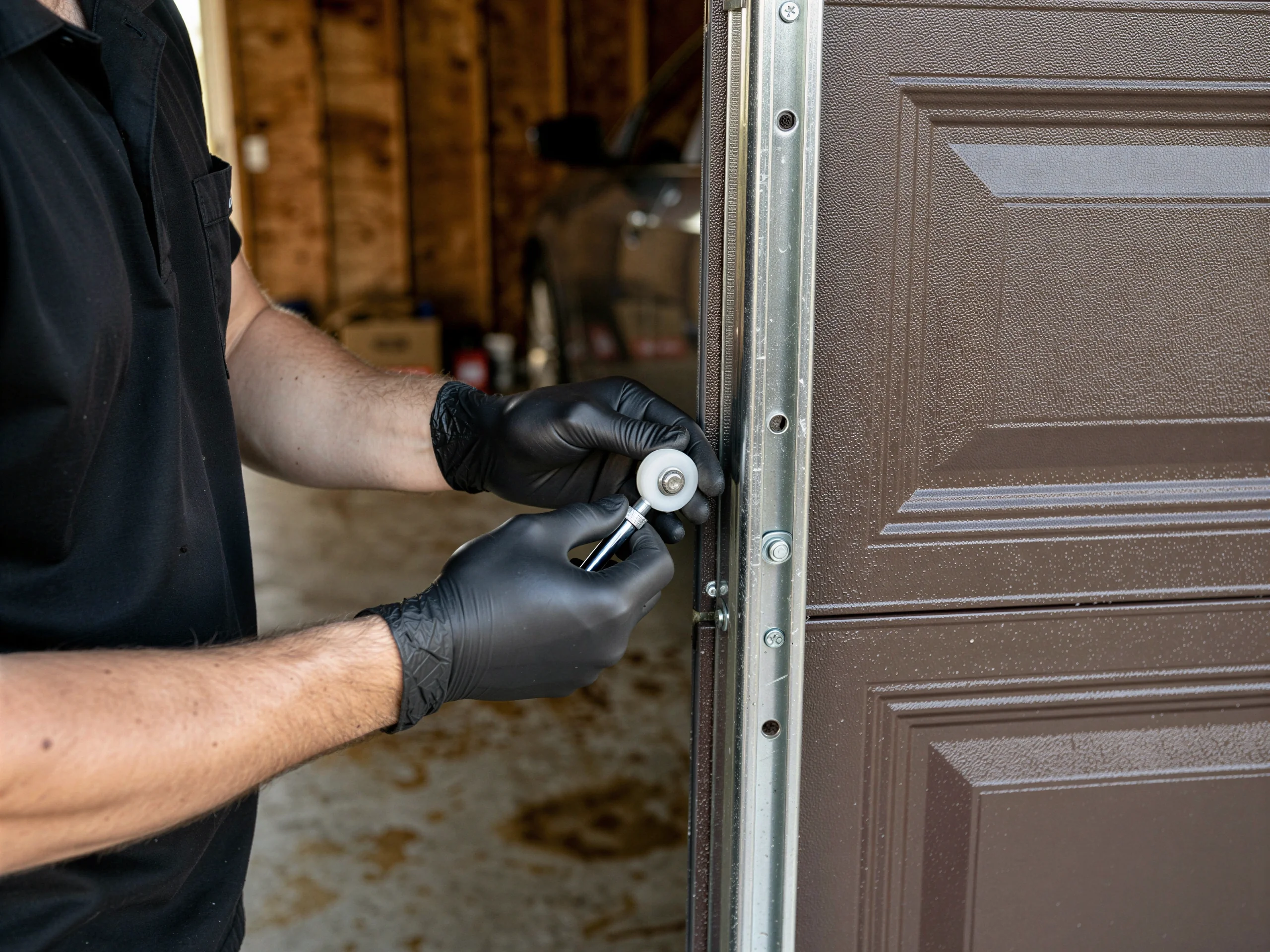
That hardware was fine for its time, but it ages differently than the torsion systems that became standard later. The brackets loosen in the jamb. The pulleys wear a groove and start shredding the cable instead of guiding it. On a door from this era, a spring failure usually isn't a clean snap - it's a slow unwind that lets one side of the door sag before the cable finally goes. If your door has started riding crooked instead of level, that's the pattern, not a coincidence.
Job timing
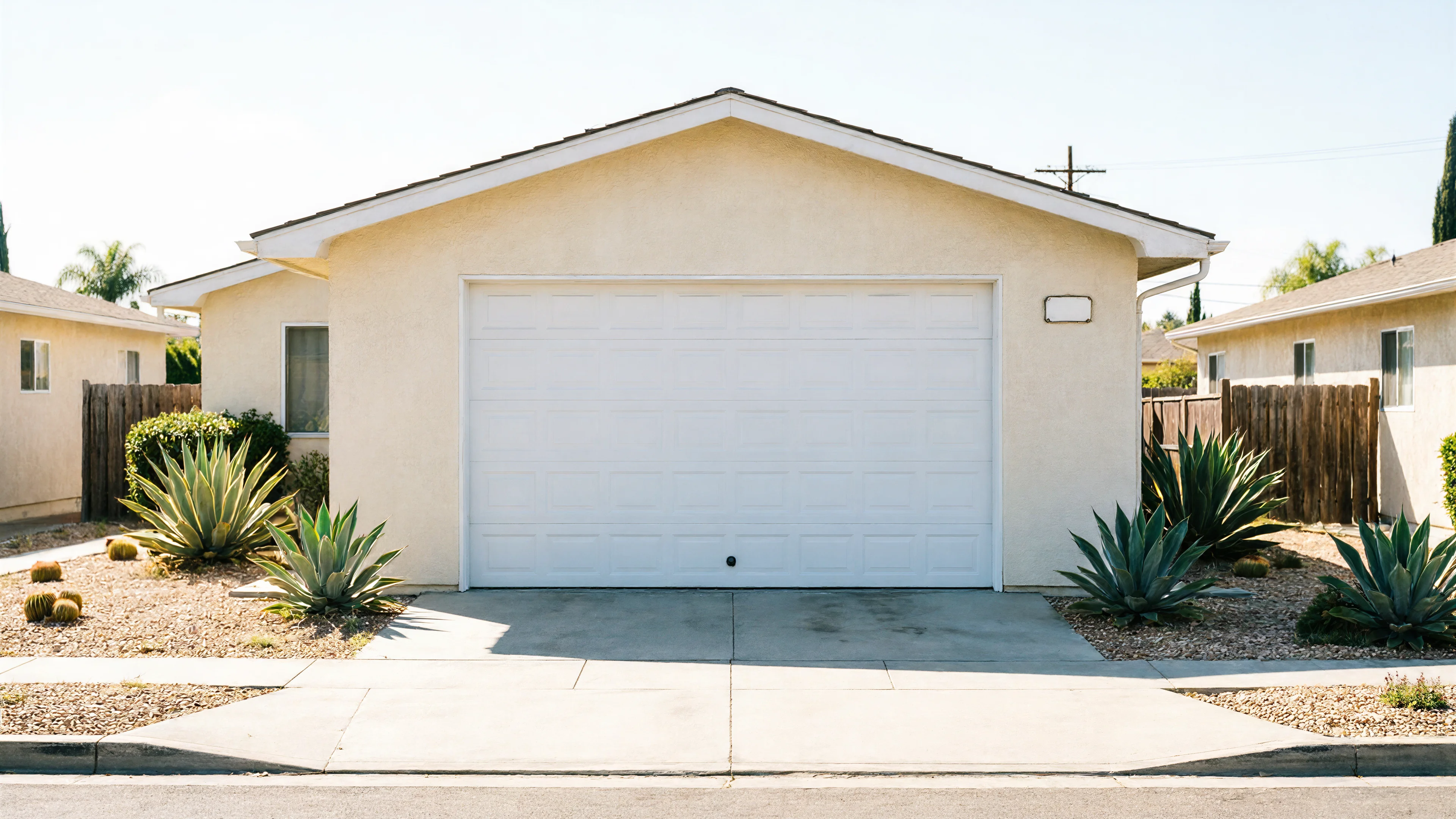
We run this job out of Alameda, about 11 miles from Castro Valley, so the first thing worth knowing is that we're not based here - every visit is a drive out, not a dispatch from a local branch.
The mild climate across this part of the Bay doesn't force us to work around ice or heat the way crews in other regions do, so the weather isn't what slows a job down.
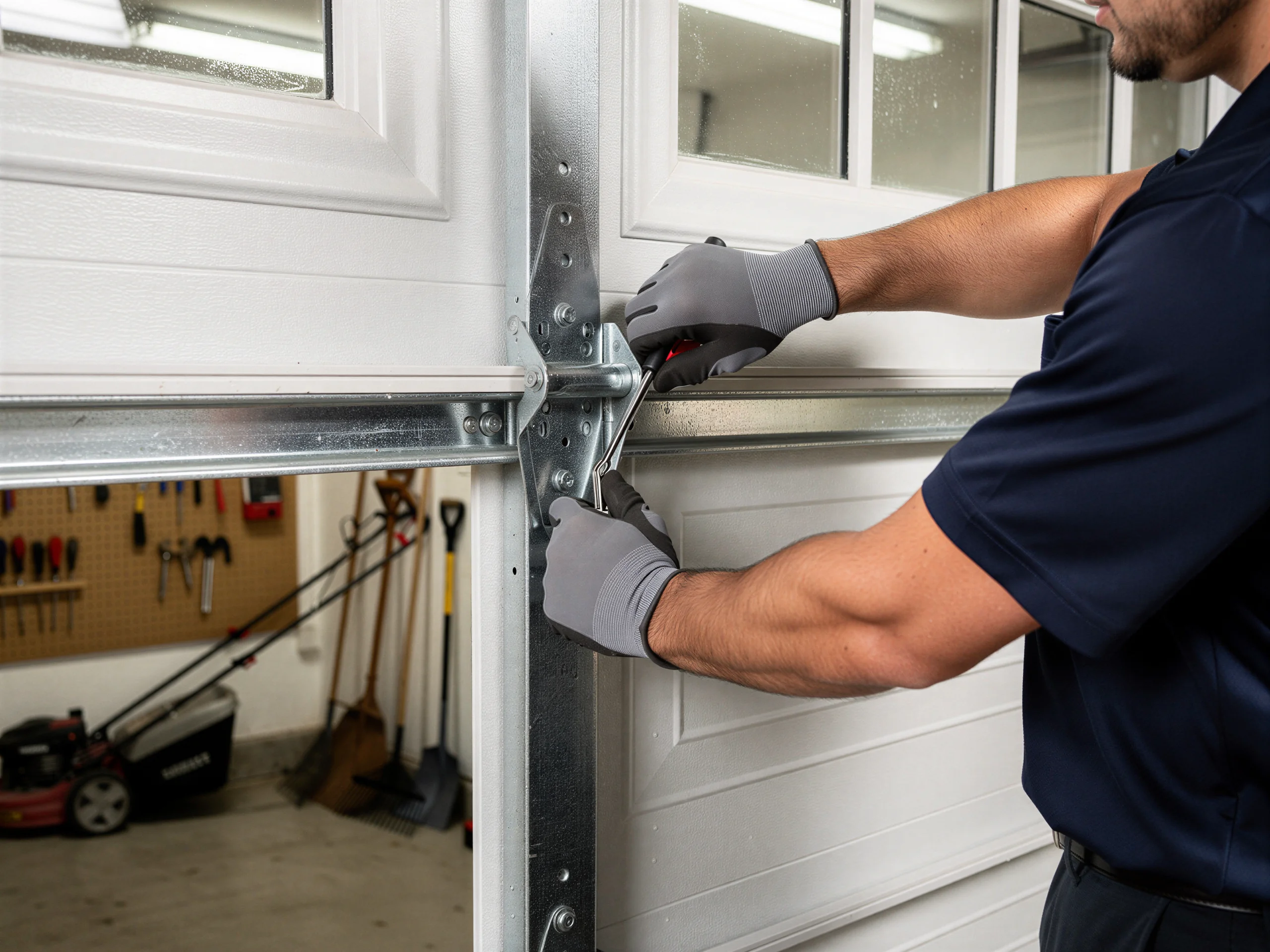
What does take time is the hardware itself. Extension-spring brackets from the 1960s often need re-drilling or a new backing plate once we're into the jamb, because the original wood has shifted over sixty years of settling.
We budget for that rather than treat it as a surprise. A straightforward spring swap on newer torsion hardware goes faster than one on an original 1960s bracket setup, and we tell you which situation you're in before we start, not after.
Symptoms
The giveaway on a house from this era is a door that drops unevenly - one corner noticeably lower than the other - rather than a door that simply won't move. That's the extension spring losing tension on one side while the other still holds, and it's a direct result of the original 1960s-70s hardware still being in place on a lot of Castro Valley homes, per the housing pattern across this part of the service area.
A second version of the same symptom: the door closes most of the way and then reverses, or shudders on the last foot of travel. That's usually a frayed cable catching on a worn pulley groove, not a sensor problem, even though homeowners often assume it's the eye sensor at the bottom of the track. Running the opener repeatedly once you see either symptom just finishes the job the worn pulley started - it stresses the second cable too.
Watch-outs
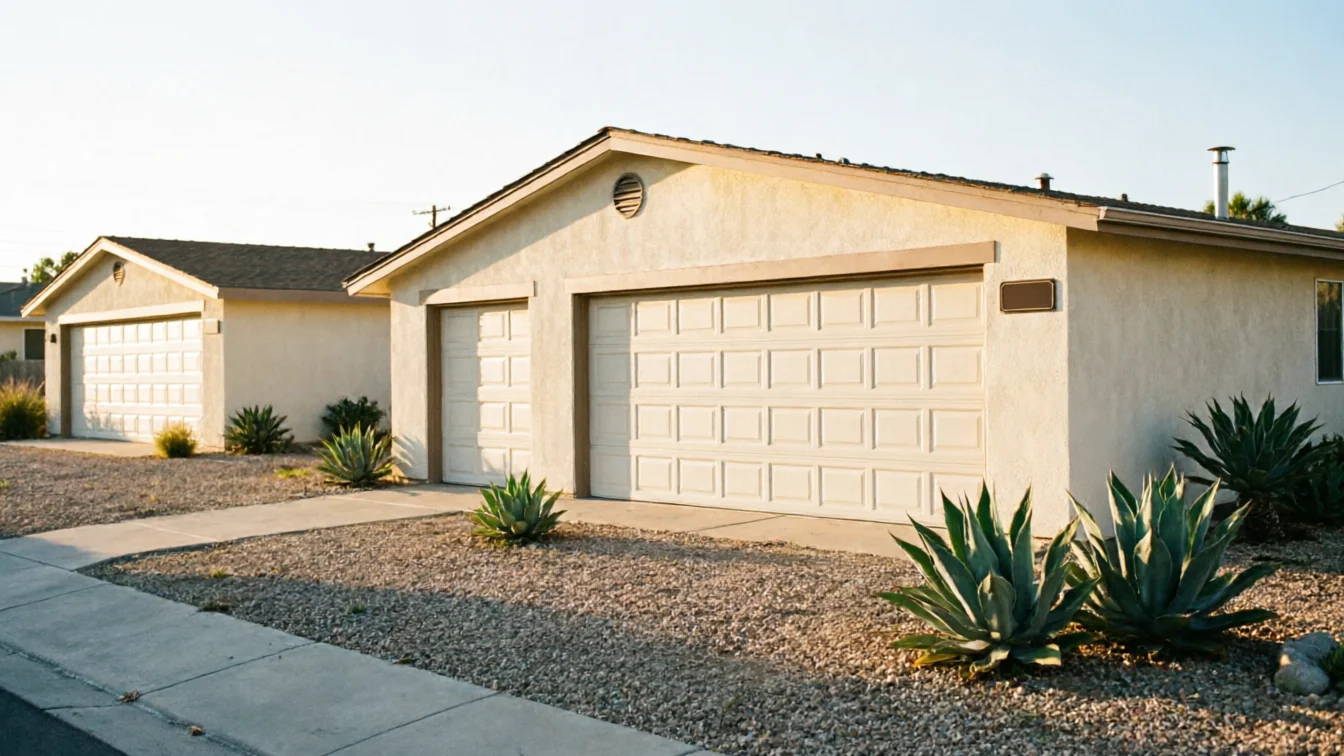
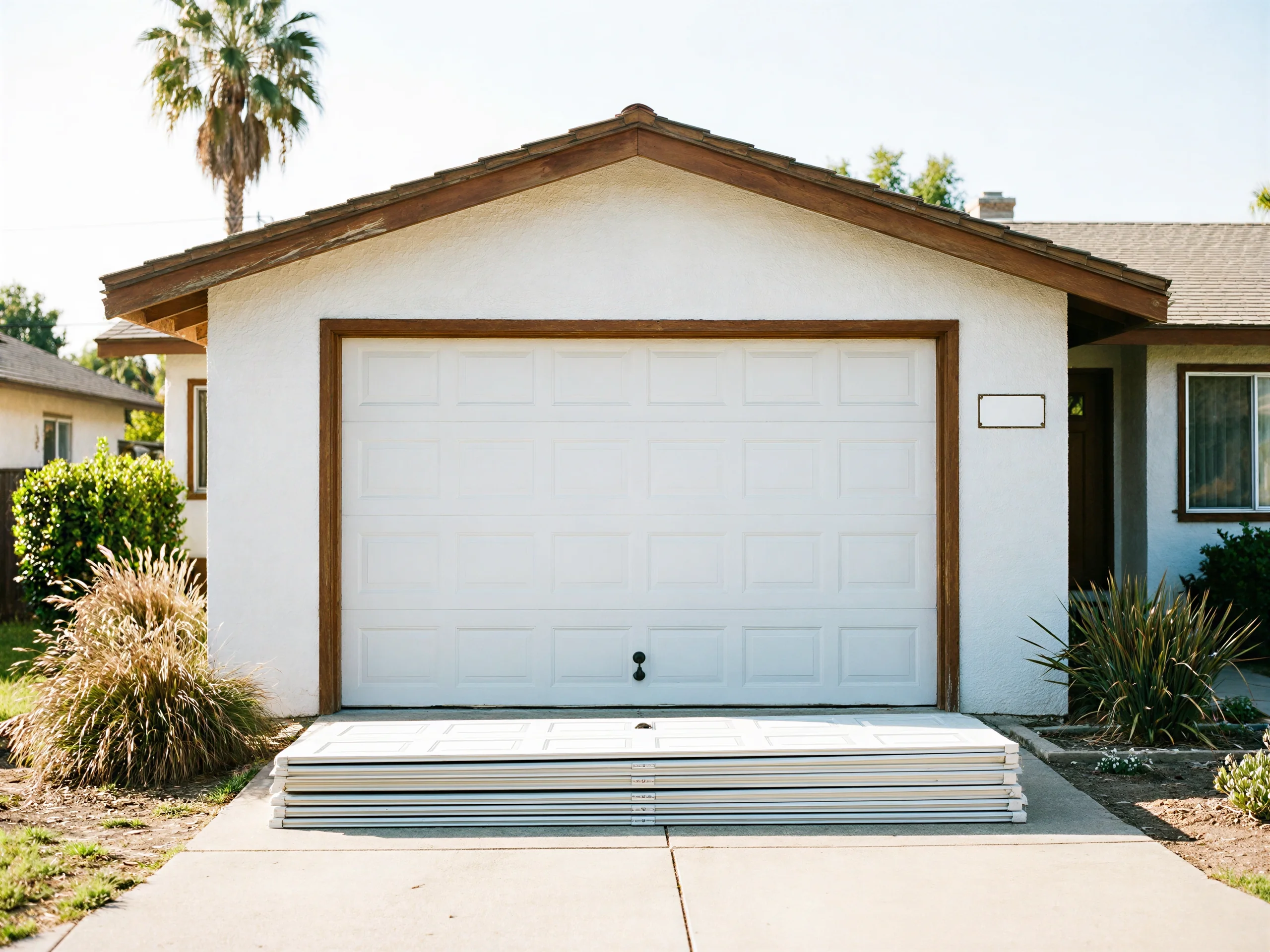
Here's the honest part: original steel panels from the 1960s are sometimes a size or profile nobody stocks anymore. When that happens, a single-panel repair turns into sourcing a full replacement door, and that's a different estimate than the one you called about. We'll tell you straight when we're looking at that situation instead of quoting a patch job that won't hold.
The other place it goes sideways is the jamb itself. If sixty years of settling have racked the opening out of square, a new spring and bracket set won't fix a door that's binding on a crooked track. We check the frame before we touch the spring, because replacing hardware on an out-of-square jamb just moves the failure point somewhere else on the door.
Pricing
We don't have a posted price list for this page, and quoting one without seeing the door would be a guess, not a number you can rely on.
What we can tell you is what drives the cost on a Castro Valley job specifically: whether the original 1960s extension hardware needs full replacement with new brackets, or whether it's a straightforward spring-and-cable swap on hardware that's still sound.
A panel that matches an obsolete 1960s profile costs more to source than a current stock size, and that's the single biggest swing factor we see on homes this old.
We'll give you the real number after we've looked at the door, not before. For the full range of what we handle out of Alameda, see our garage door service page; for more on this town specifically, see our Castro Valley page.
Questions
That's the extension spring on one side losing tension while the other still holds - common on original 1960s hardware still found on a lot of Castro Valley houses. It's not usually the opener; it's the spring and bracket system itself aging unevenly on each side of the door.
No. We're based in Alameda, about 11 miles away, and drive out for every Castro Valley job. There's no local branch or depot here - just a truck that comes from Alameda for each call.
Sometimes. Steel panels from the 1960s building period can be an obsolete size or profile, and sourcing a match costs more and takes longer than a current stock panel. We check this before quoting so you're not surprised later.
Not likely here. This part of the Bay runs a mild temperate climate without the extreme heat or ice swings that stress hardware elsewhere. What's wearing out your spring and pulleys is age - most of this housing dates to the 1960s and 70s - not weather.
Explore more
Ready when you are
Alameda Garage Door Pros repairs and installs garage doors, springs and openers in Alameda, CA and the surrounding area.