Opener spares stocked
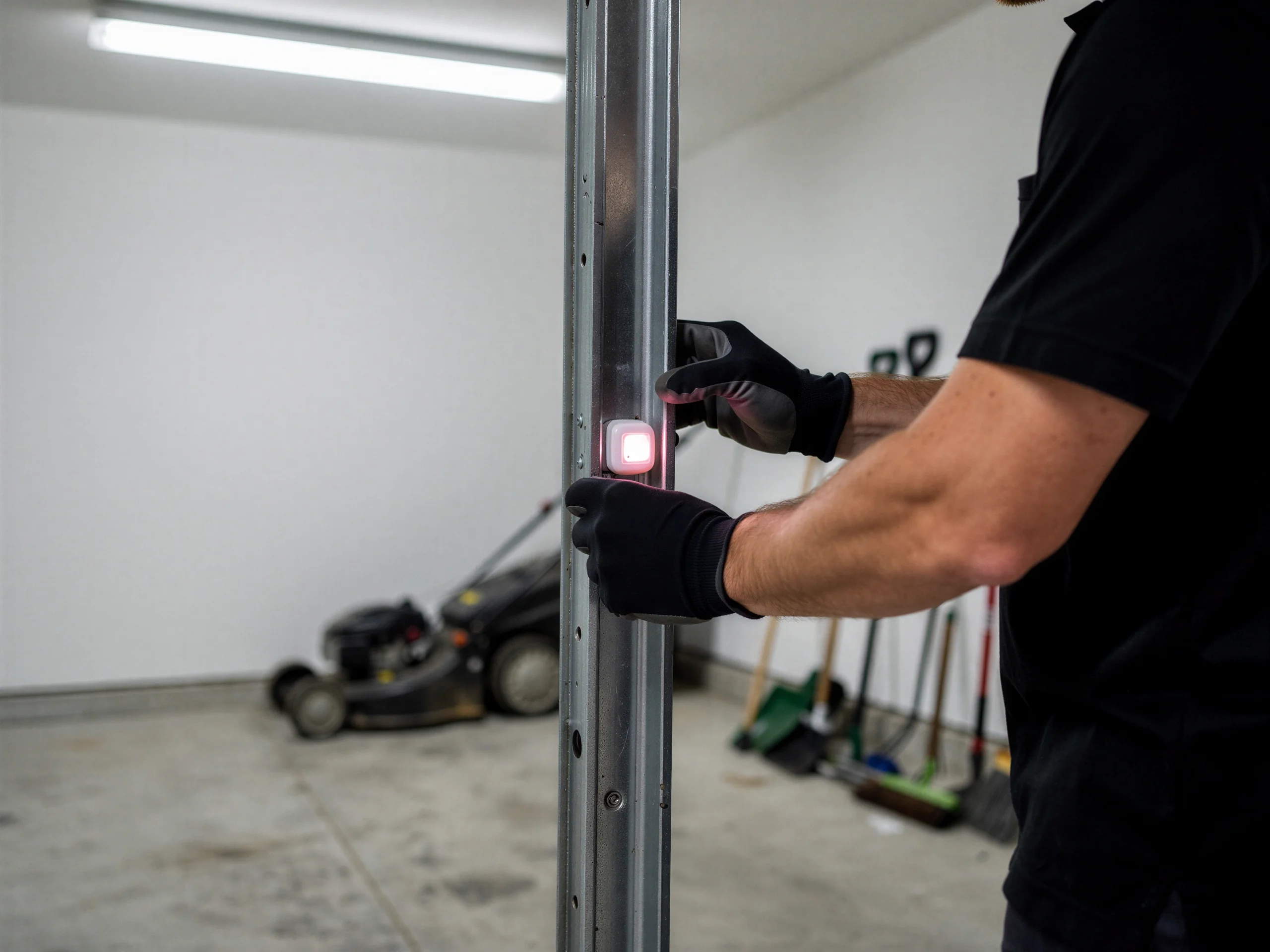
The truck carries drive gears, chain and belt conversion kits, logic boards, wall consoles, replacement remotes, and photo-eye safety sensors, because a huge share of what we pull off these openers is original or close to it.
Union City, Alameda
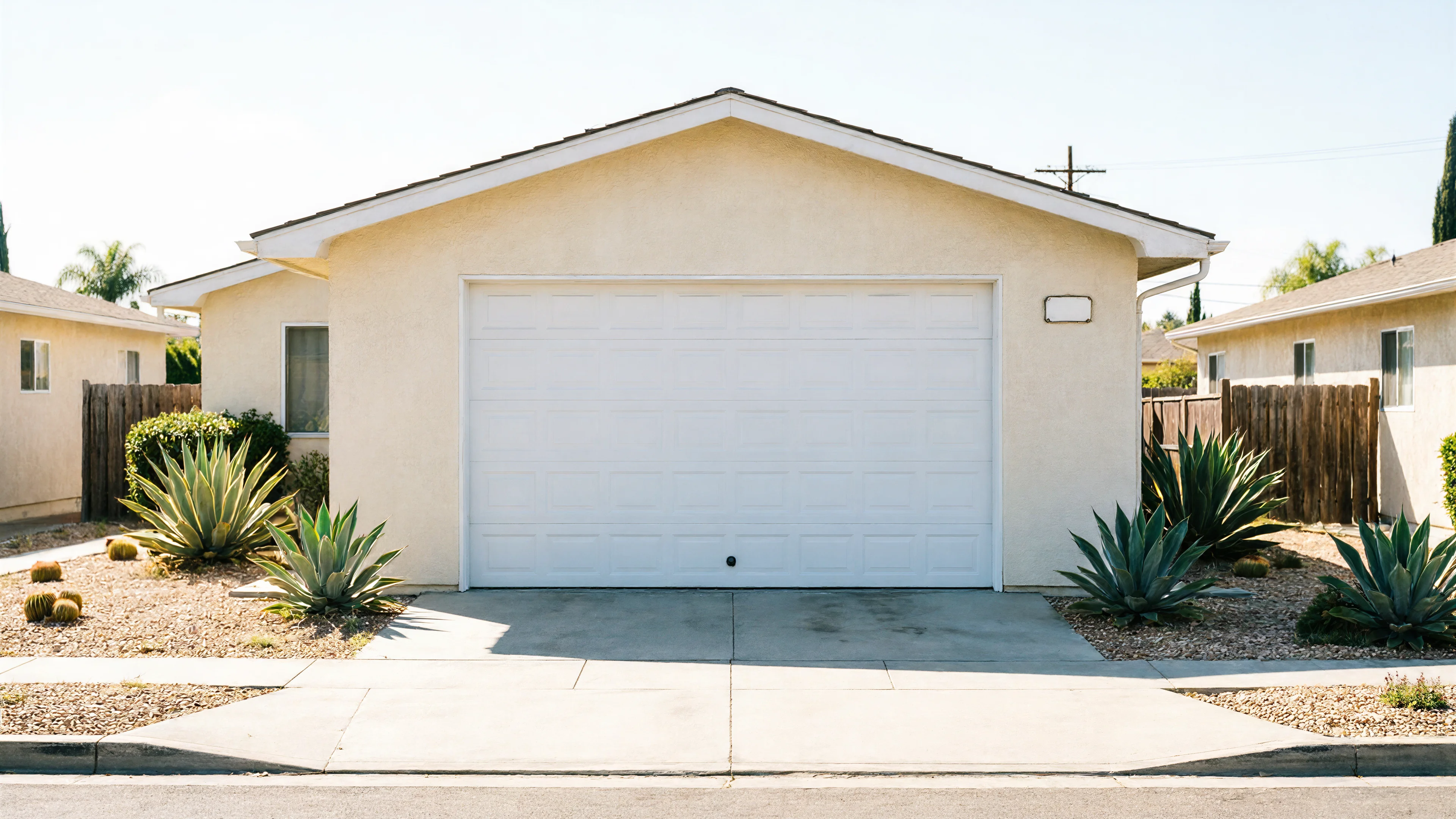
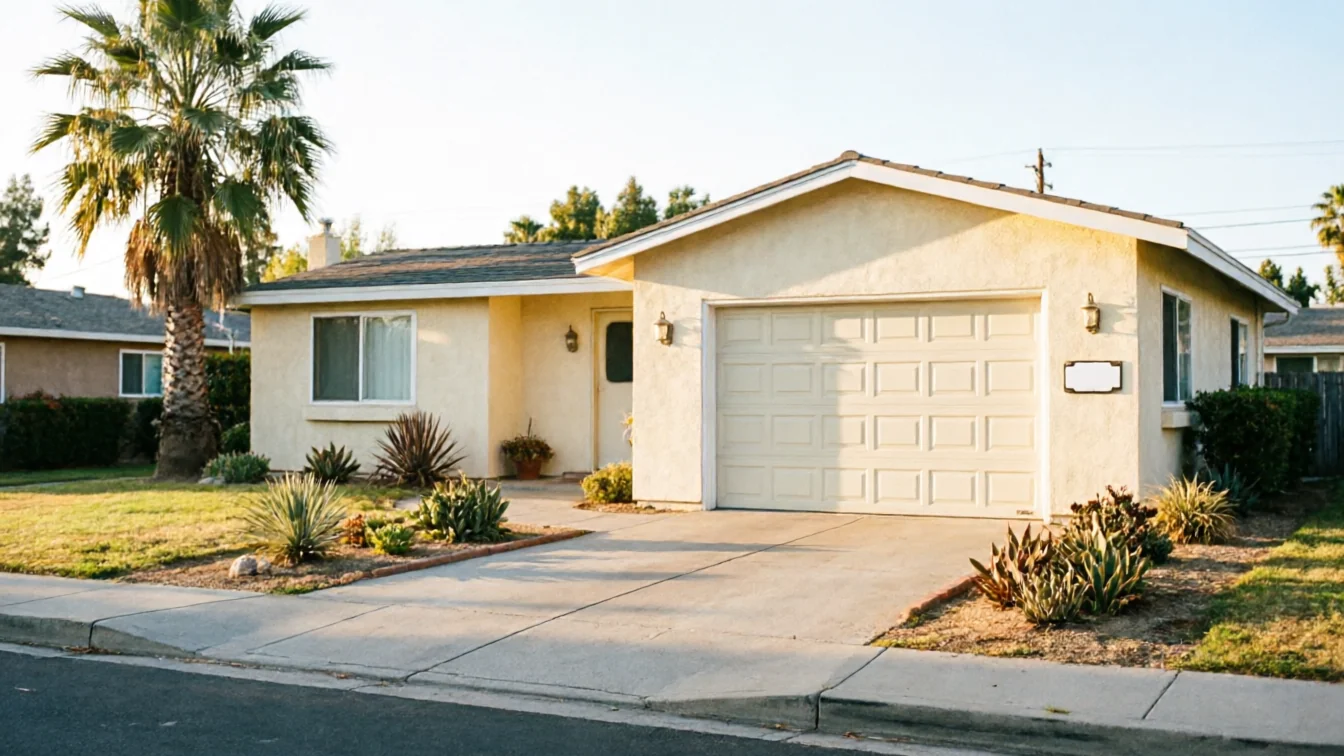
Union City's garages went up around 1979, mostly with chain-drive openers from that same build wave. We service those exact units, 16 miles out from our Alameda shop.
On the truck
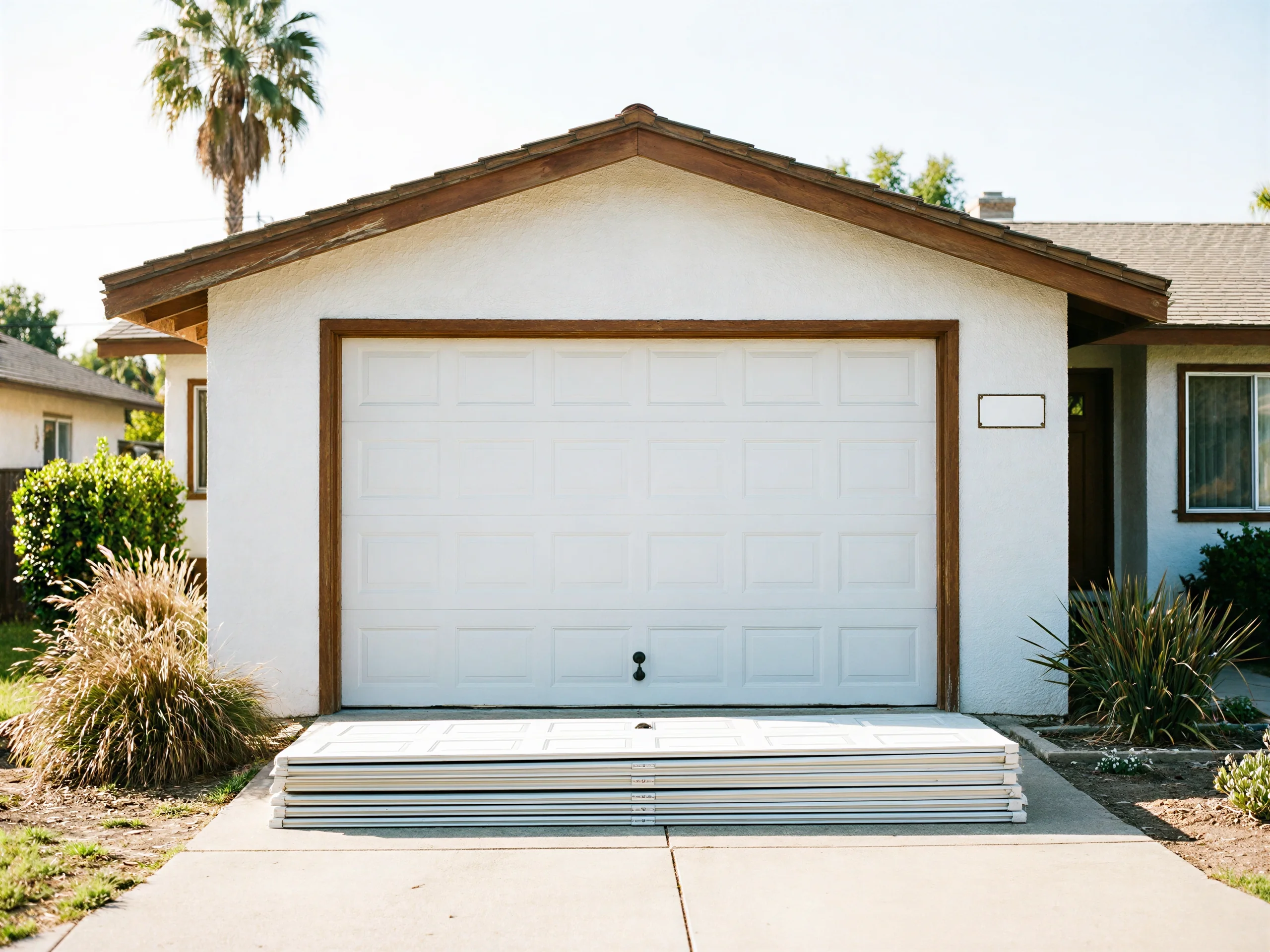
Union City's housing stock centers on a median build year of 1979, and that era of tract construction mostly went in with steel sectional doors - 16-foot double bays or 9-foot singles - paired with chain-drive openers from the same wave: early Genie, Chamberlain, and Craftsman units bolted to wood headers.
The truck carries drive gears, chain and belt conversion kits, logic boards, wall consoles, replacement remotes, and photo-eye safety sensors, because a huge share of what we pull off these openers is original or close to it.
The mild temperate climate here means we're not fighting the freeze-thaw cracking or extreme humidity swelling that wrecks openers in harsher regions - most of what fails on a 1979 unit is simply age: worn nylon gears, dried grease on the rail, a logic board that's seen forty-some years of duty cycles.
We don't stock every obsolete chain-drive part on the truck; some older gear housings are long out of production, and if we don't have the part, a logic-board swap or full opener replacement is the honest call, not a special order that leaves your door down for a week.
Watch-outs
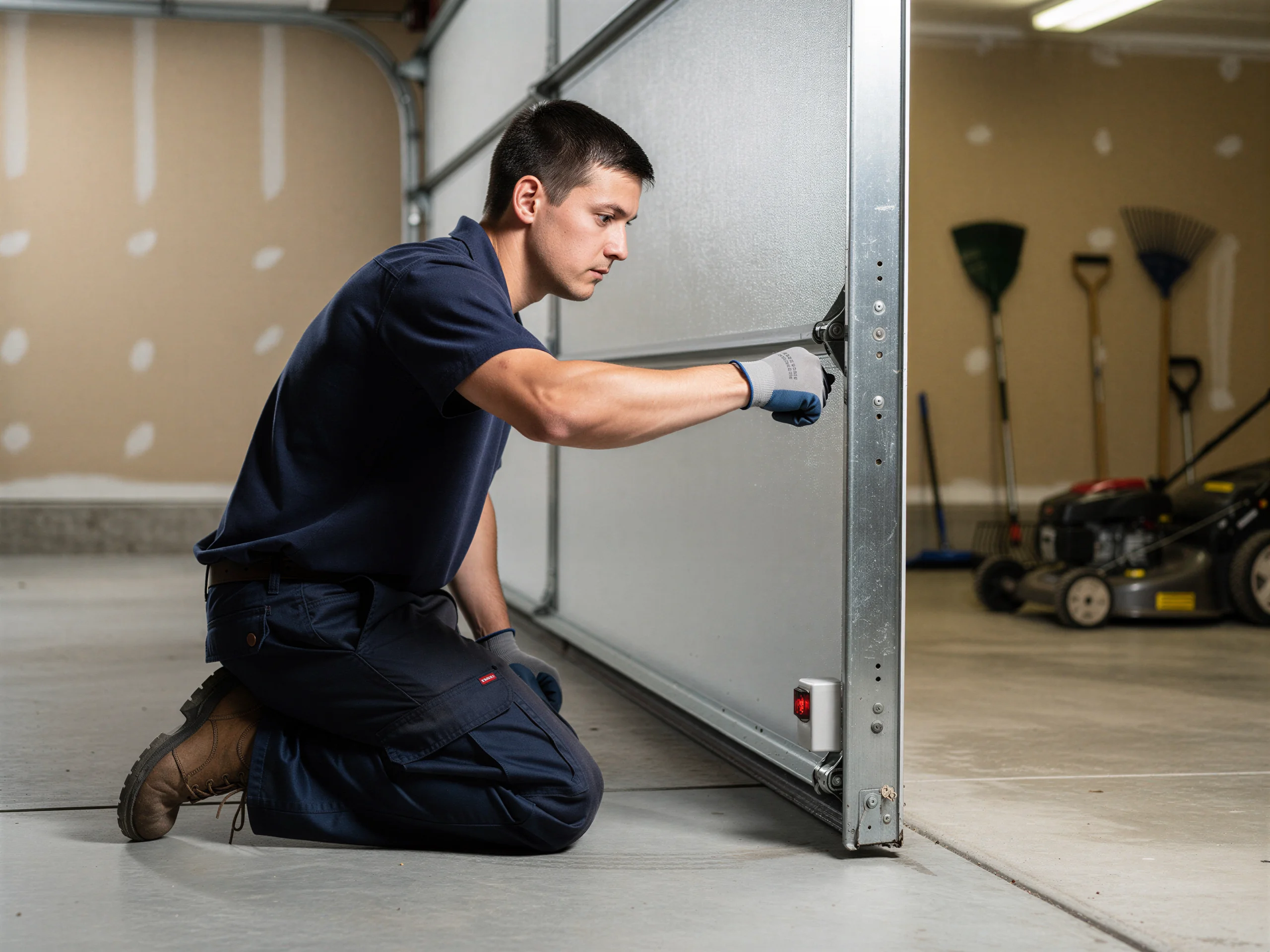
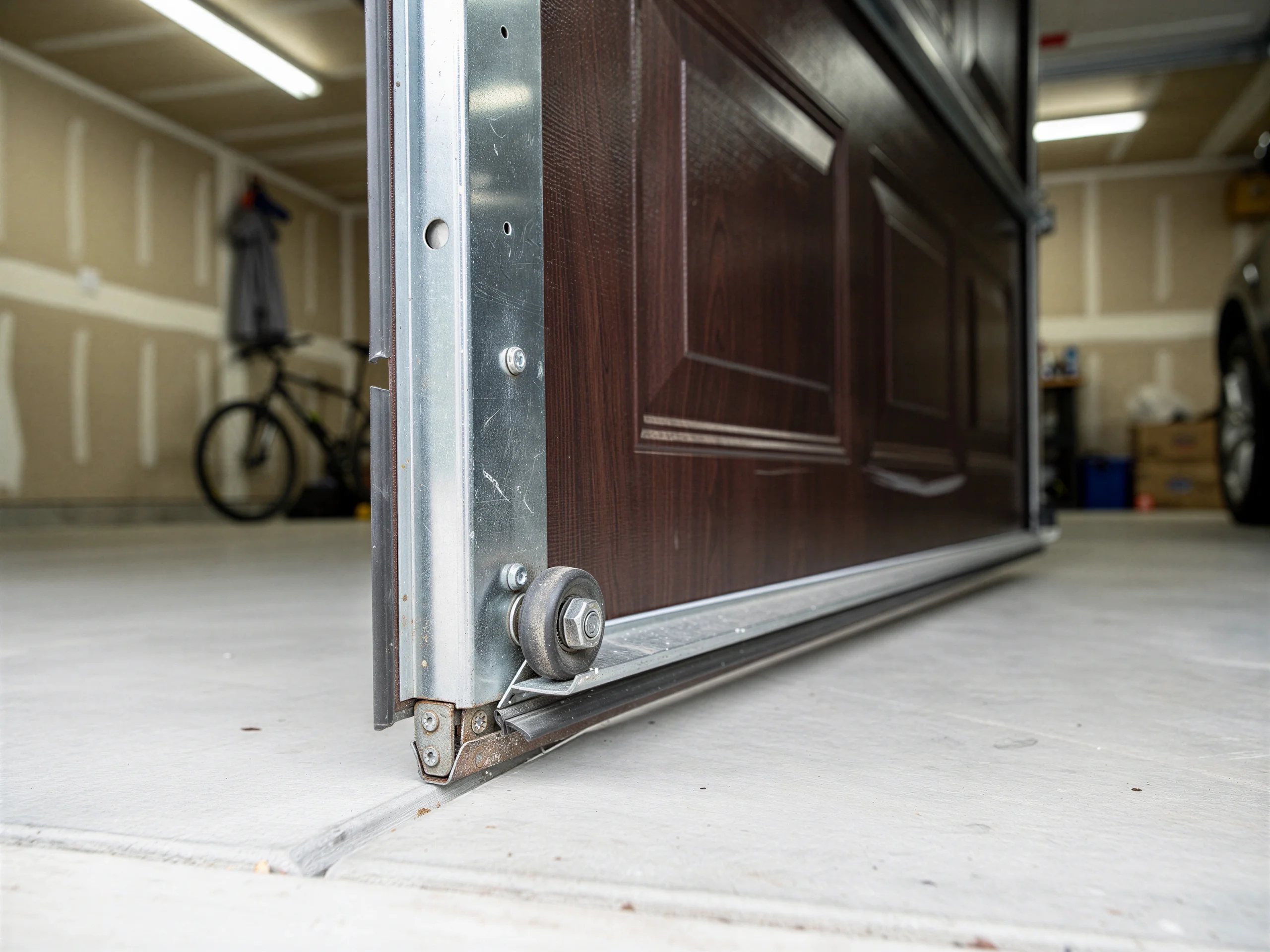
The trouble with a 1979-built garage isn't usually the opener itself - it's what's attached to it. Original wiring from that build era often predates the federal photo-eye safety requirement added in the early 1990s, so a straight opener swap sometimes means also running new sensor wire across the bay, which the first phone call rarely mentions. Steel doors from this period are heavier than the composite doors sold today, and a replacement opener sized for a lighter modern door will strain and fail again within a year if nobody checks the door's actual weight first. We've also found garages in this build wave where the opener was replaced once already, decades ago, with a model that doesn't match the original rail bracket - so what looks like a simple logic-board job turns into a bracket and rail swap once the cover panel comes off.
Job timing
A straight logic-board swap on a chain-drive opener usually runs under an hour once we've confirmed the model and pulled the matching board off the truck.
Chain-to-belt conversions, or jobs where the safety sensor wiring has to be rerun because the original run predates code, take longer - bracket alignment and wire routing eat the extra time, not the part itself.
Where a 1979-era opener has a cracked gear housing that's no longer made, we're often looking at a full unit replacement rather than a repair, and that conversation happens before we start pulling the cover off, not after. We don't pad the estimate with diagnostic time we don't need; if the symptom matches a known failure on these units, we go straight at it.
DIY or pro
Serving Alameda, CA
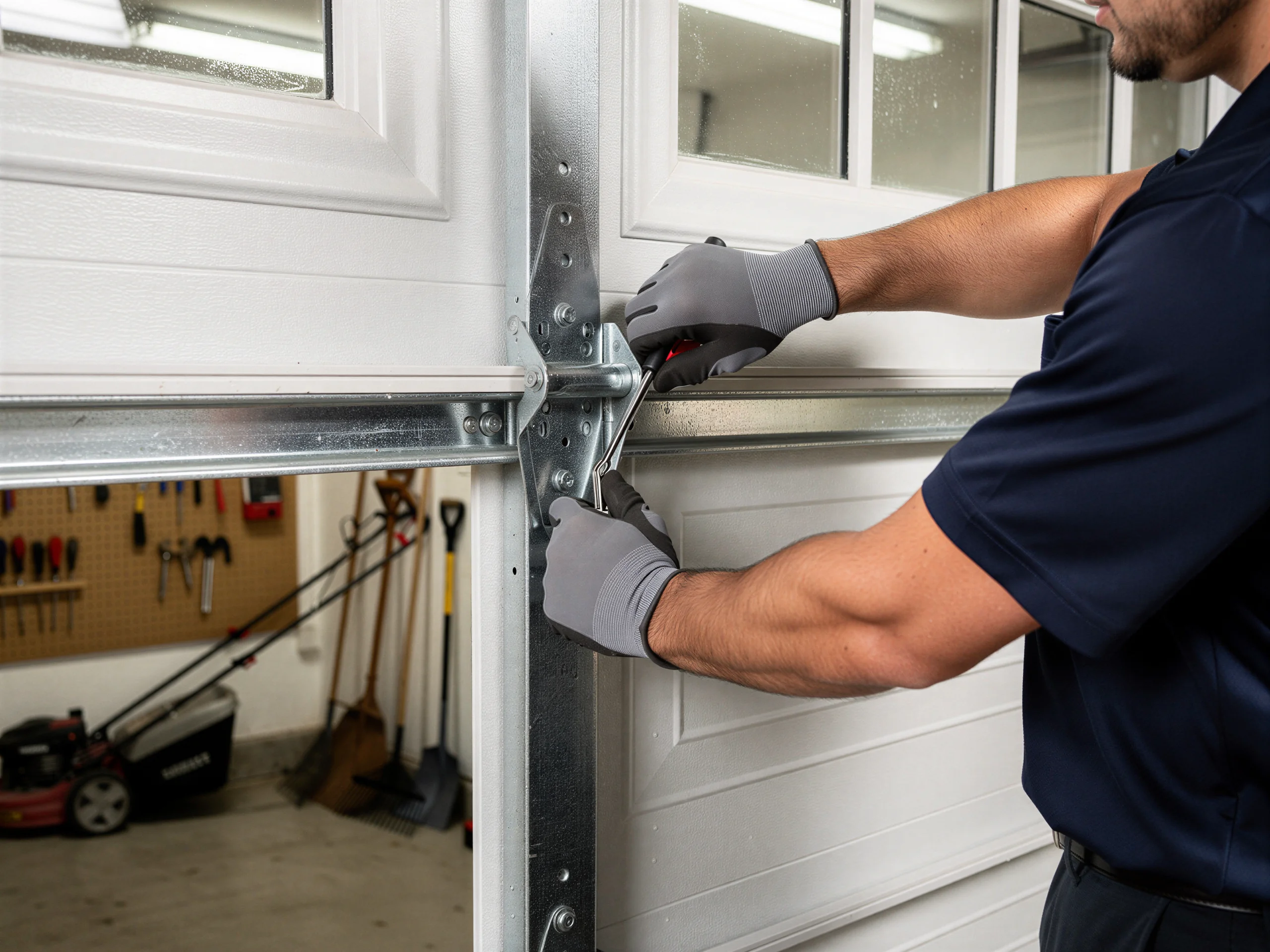
Swapping remote batteries, reprogramming a wall console, or cleaning the photo-eye lenses are fine weekend jobs and don't need a call. Anything past that on a 1979-built opener gets riskier fast. The logic board sits behind a cover with live 120-volt wiring, and the travel limits on these older units are mechanical screws, not the digital settings on a newer opener - get them wrong and the door can slam down instead of stopping. If your opener predates the federal auto-reverse safety requirement and it's never been upgraded, that's not a DIY fix; that unit needs to come out, full stop, regardless of how well it still runs.
Symptoms
The call we get most from this part of the service area is an opener that hums or clicks but the door doesn't move - the motor's running, the drive gear inside the housing has stripped, and on a chain-drive unit from the late 1970s that gear is nylon and it's the first thing to go after decades of duty cycles.
A close second is a door that reverses partway down every time, which on an original-era opener usually means the mechanical down-limit screw has drifted, not a sensor problem.
Less common but not rare: a remote that used to work and now does nothing, which on these older units is often a dead coin-cell board rather than anything mechanical.
Local causes
Union City's roughly 21,202 households sit on a housing stock that skews older than a lot of the newer construction you'll find closer to the bay, and a median build year of 1979 means a large share of garages here are still running their second or even first opener. At a median household income of $137,194, we see fewer wholesale opener replacements out of convenience and more targeted repairs - people fixing the gear or the board rather than swapping the whole unit on a whim, which is a reasonable call on a unit that's otherwise sound. The mild climate band this area sits in means these openers aren't dying from weather stress; they're dying from decades of use on original hardware, which is a different repair conversation than what we'd have in a region with hard freezes or heavy humidity.
Questions
Not automatically. Age alone doesn't rule out a repair - a worn gear or a bad logic board can usually be replaced even on a late-1970s unit. What rules it out is a cracked gear housing we can't source, or an opener that predates the federal auto-reverse safety standard and has never been upgraded. We'll tell you straight which category yours falls into before we start.
We carry the common gears, chains, belts, boards, and sensors that fit most units from this build era. Some original housings from the late 1970s are long out of production, and if we don't have it, a board swap or full replacement is usually faster and cheaper than chasing a discontinued part.
On a chain-drive unit from this era, that's almost always a stripped nylon drive gear inside the motor housing. The motor spins, but it's no longer turning the chain. It's a common failure after decades of duty cycles and it's a straightforward swap once we've confirmed the model.
We run this job from our Alameda shop, about 16 miles from Union City. We don't keep a branch or depot in town, so we're honest that this is a dispatched job, not a drop-in.
Explore more
Ready when you are
Alameda Garage Door Pros repairs and installs garage doors, springs and openers in Alameda, CA and the surrounding area.