Serving Alameda, CA & nearby(510) 229-3331
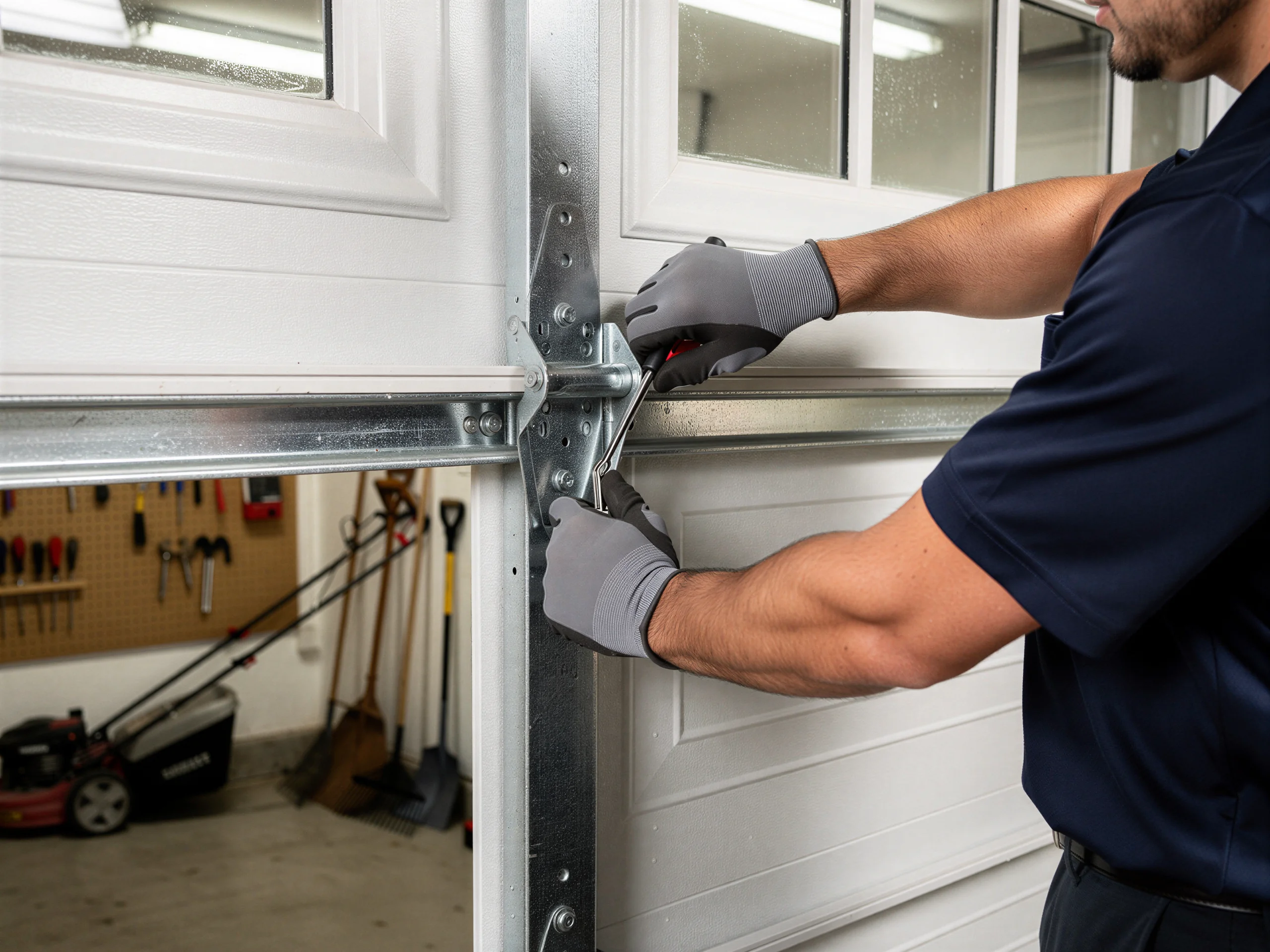
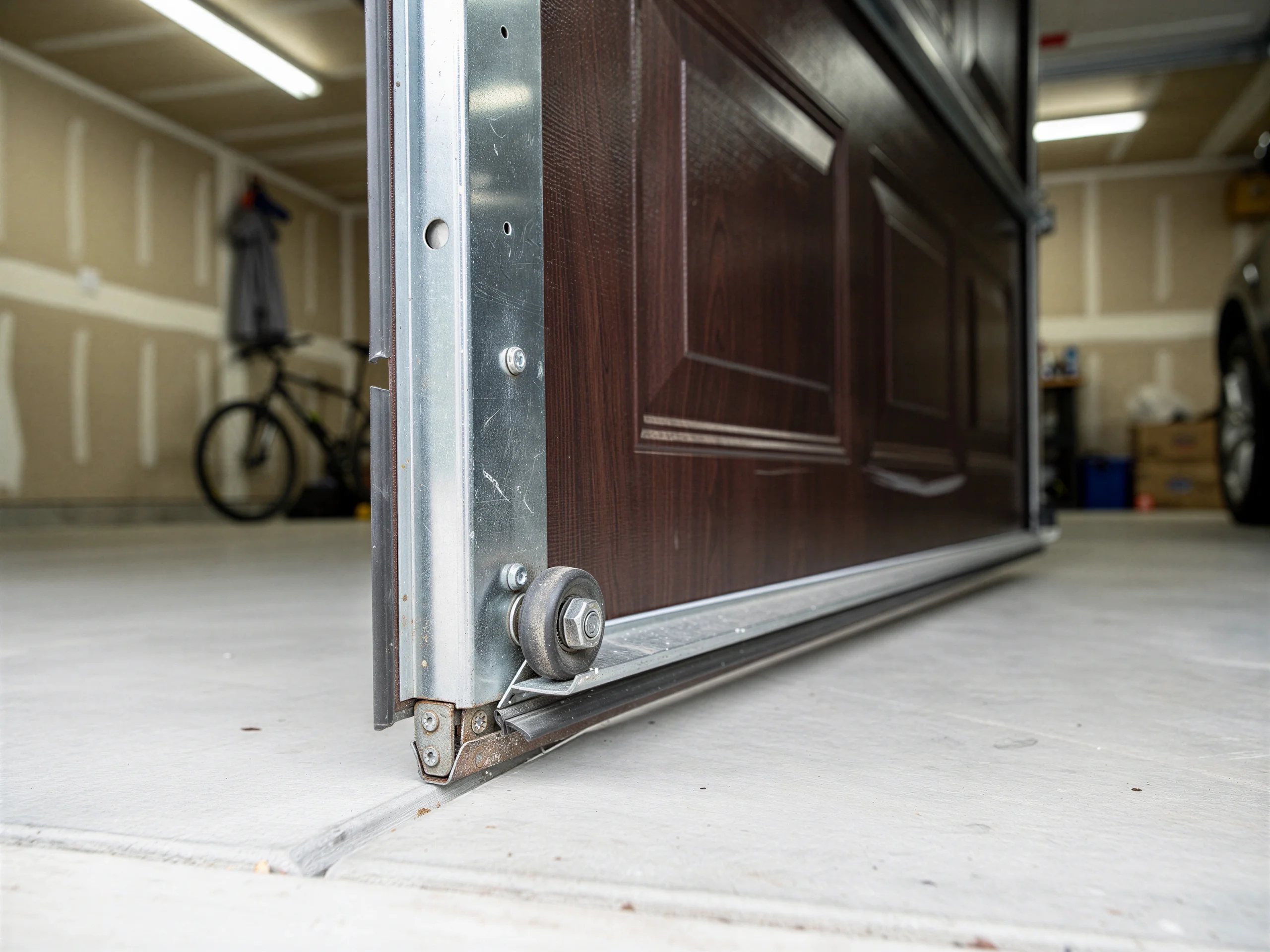
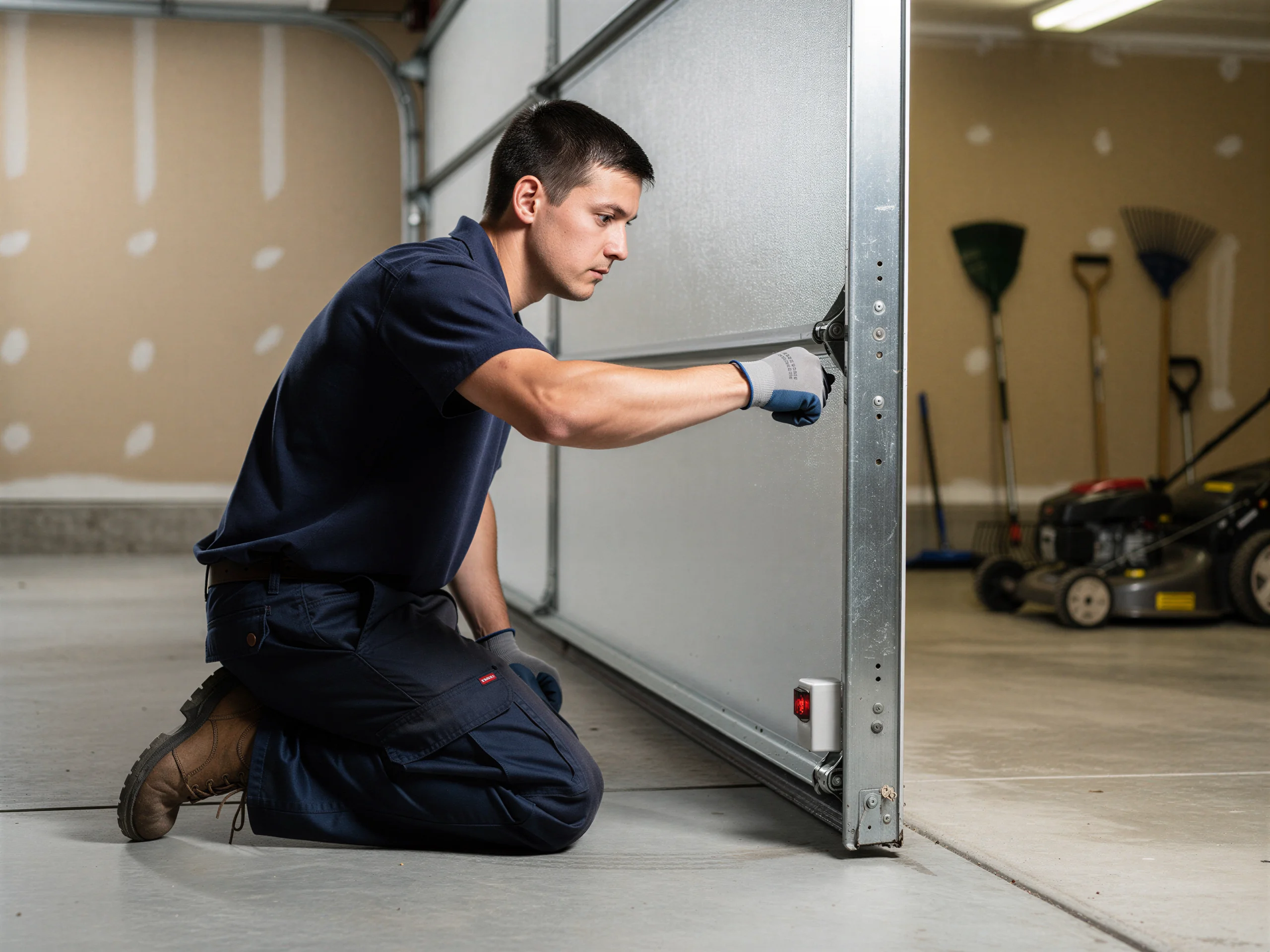
A technician kneels to inspect the bottom roller of a white garage door.

Union City, Alameda

Garage Door Repair and Opener Service for Union City Homes

Union City's housing stock runs newer than most of the service area, median build year 1979, and the hardware on those doors is not what's in a 1960s Alameda garage.

Serving Alameda, CABackground-checked techsHonest, upfront pricingFast local response

On the truck

What Is on the Truck

We carry what fits the doors that went up around here. Union City's housing stock centers on 1979, about a decade newer than the service area's overall median of 1965, which means more double-car garages built for steel sectional doors on torsion hardware rather than the single-car wood doors and extension springs you'll find on older stock closer to the water.

Stocked parts overview

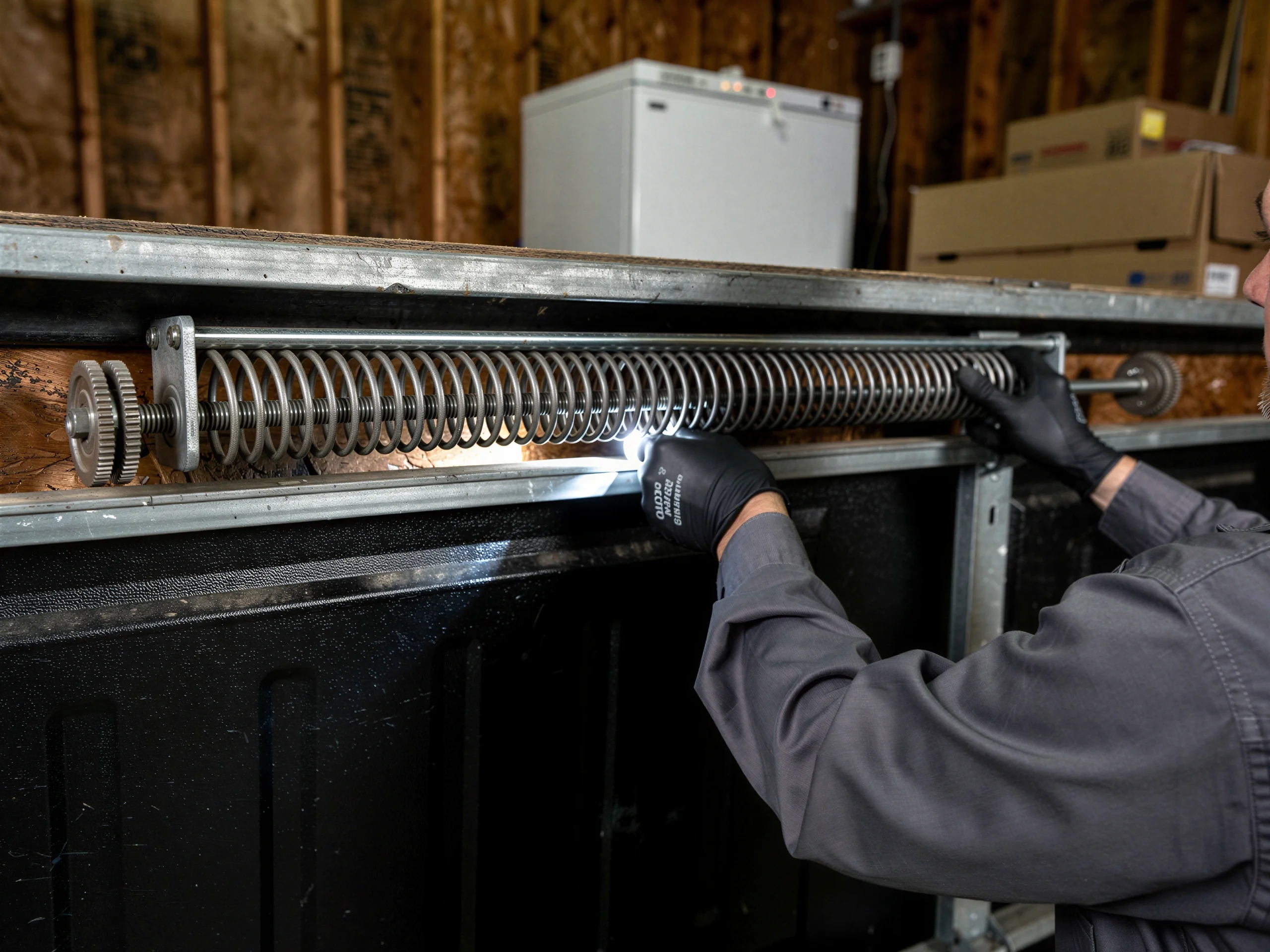
The truck carries torsion springs in the sizes that match those builds, steel sections, and opener circuit boards for the chain-drive units that were standard when this part of the county was being built out. What we don't carry is every discontinued panel profile.

Discontinued panel lead time

If a door from a manufacturer that stopped making a specific ribbed or flush panel in the 1980s needs matching, we're ordering it, and that's a lead time we can't shrink. We'll tell you that on the first visit, not after we've already started the job.

Garage moisture on hardware

The mild temperate climate here is kind to steel panels generally - this isn't a region fighting heavy rust from road salt or deep freeze-thaw - but garage interiors still collect moisture, and that shows up first on the hardware, not the panel.

Watch-outs

Where This Job Goes Sideways

The common failure in a neighborhood built out around 1979 is a torsion spring that's done its 10,000-cycle run on a double door. Double doors carry more spring tension than singles, and when one spring goes on a two-spring system, the door looks fine sitting shut but will rack or twist the second someone tries to lift it - by hand or by opener. That's the job that goes sideways if you don't catch it early: a strained opener motor trying to lift a door that's lost half its counterbalance burns out gears it didn't need to burn out.

The other place it goes wrong is the track alignment on original builder-grade hardware that's never been touched since install. Forty-plus years of settling on a slab means the tracks aren't plumb anymore, even if nobody ever noticed. Replace the spring without checking the tracks and you've fixed one problem and left the one that caused the uneven wear.

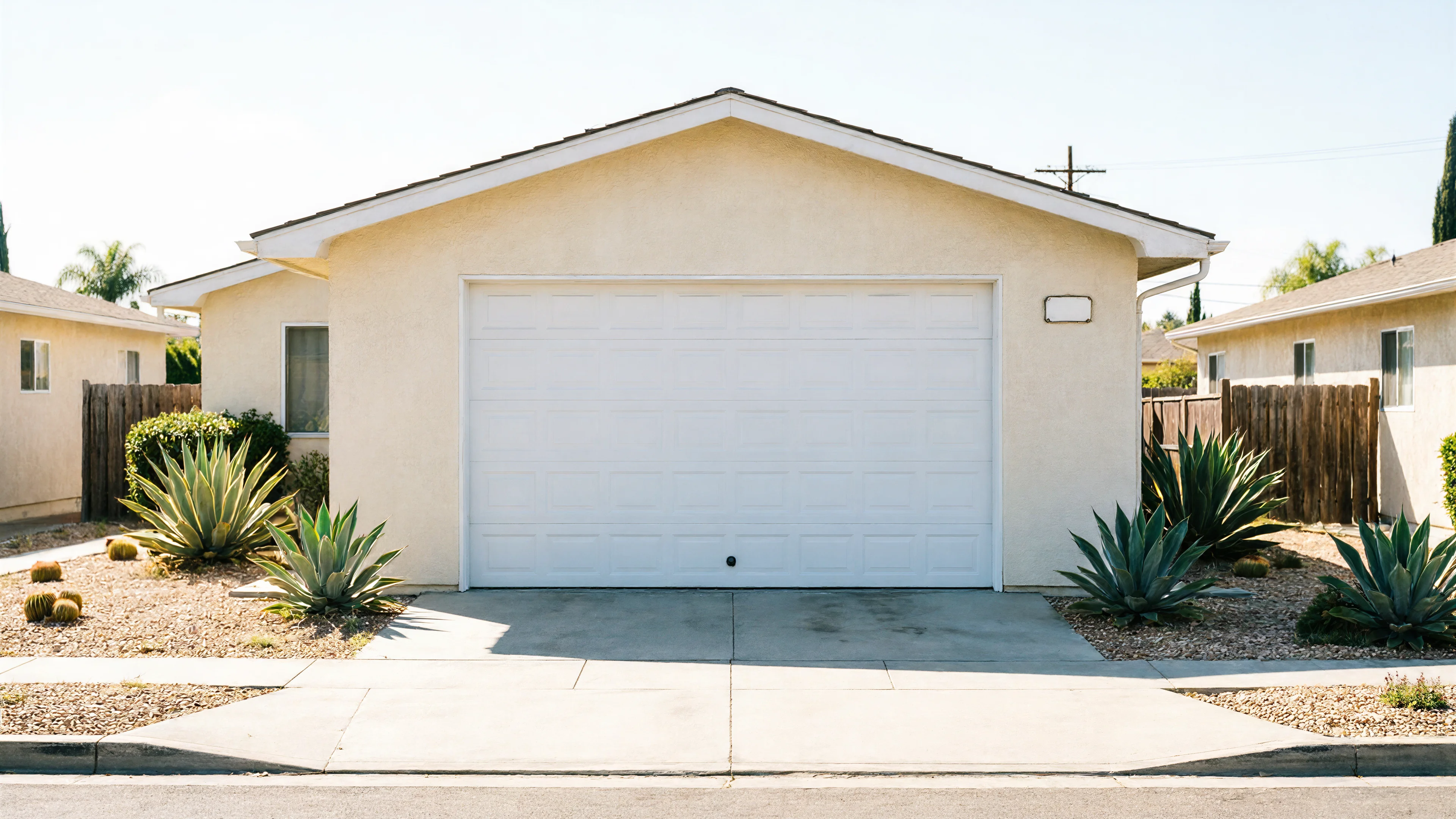
A light yellow house has a white garage door and desert landscaping.

Job timing

Time on the Job

Union City sits about 16 miles out from Alameda, which is the longer end of the drive for this crew compared to the closer parts of the service area.

Travel built into scheduling

That travel time gets built into how a day gets scheduled rather than into the price of the repair itself - it just means fewer same-day slots open up on short notice for jobs out this far. Once on site, a straightforward torsion spring swap on a standard double door runs under two hours including the balance check and lubrication pass.

Replacement may need second trip

A full door replacement, especially if the opening needs reframing or the old track brackets are rusted into the jamb, takes longer and sometimes means a second trip if a part has to be ordered. We'd rather tell you it's a two-visit job up front than promise a one-visit fix and miss it.

DIY or pro

Can You Do This Yourself

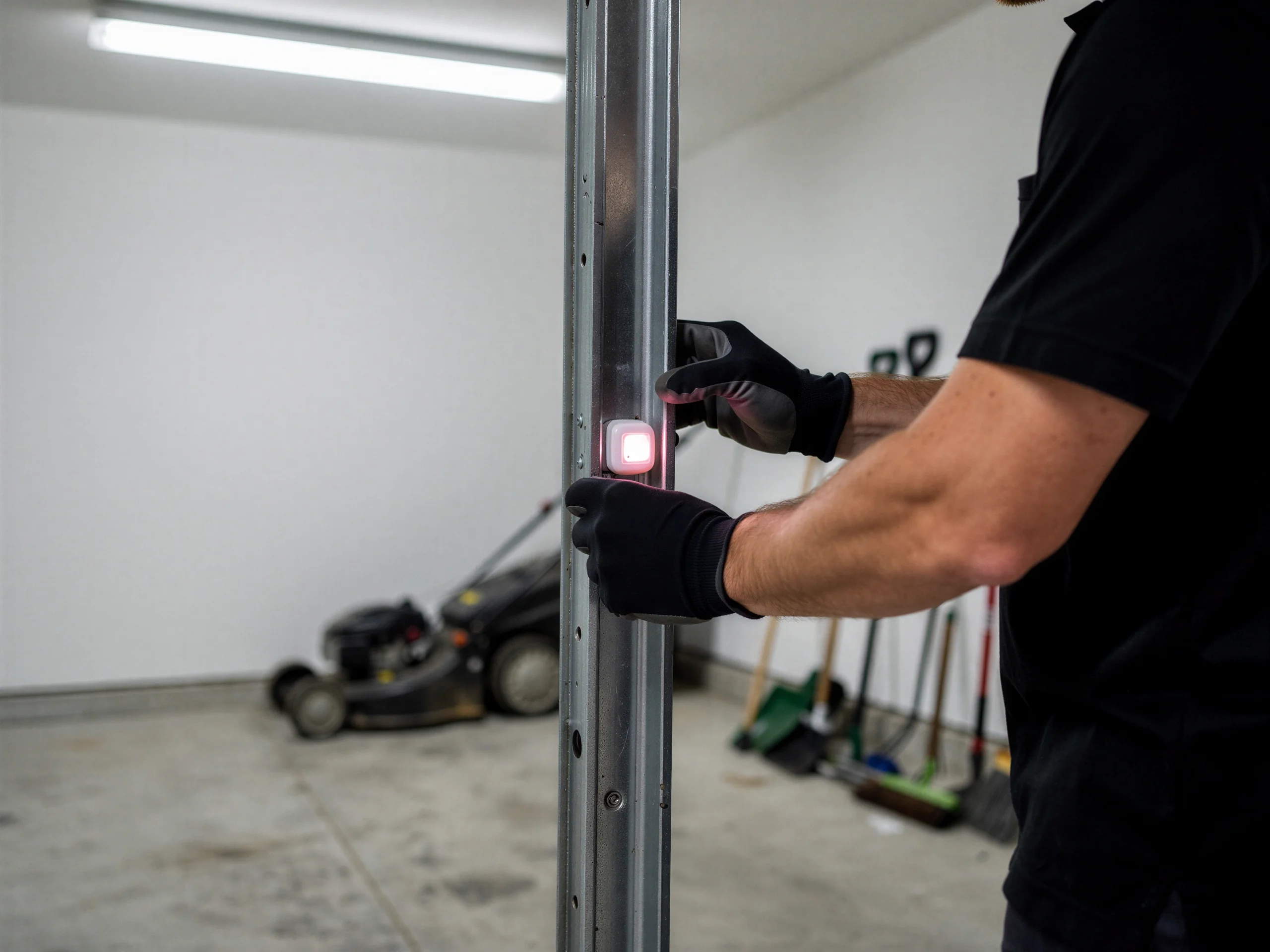
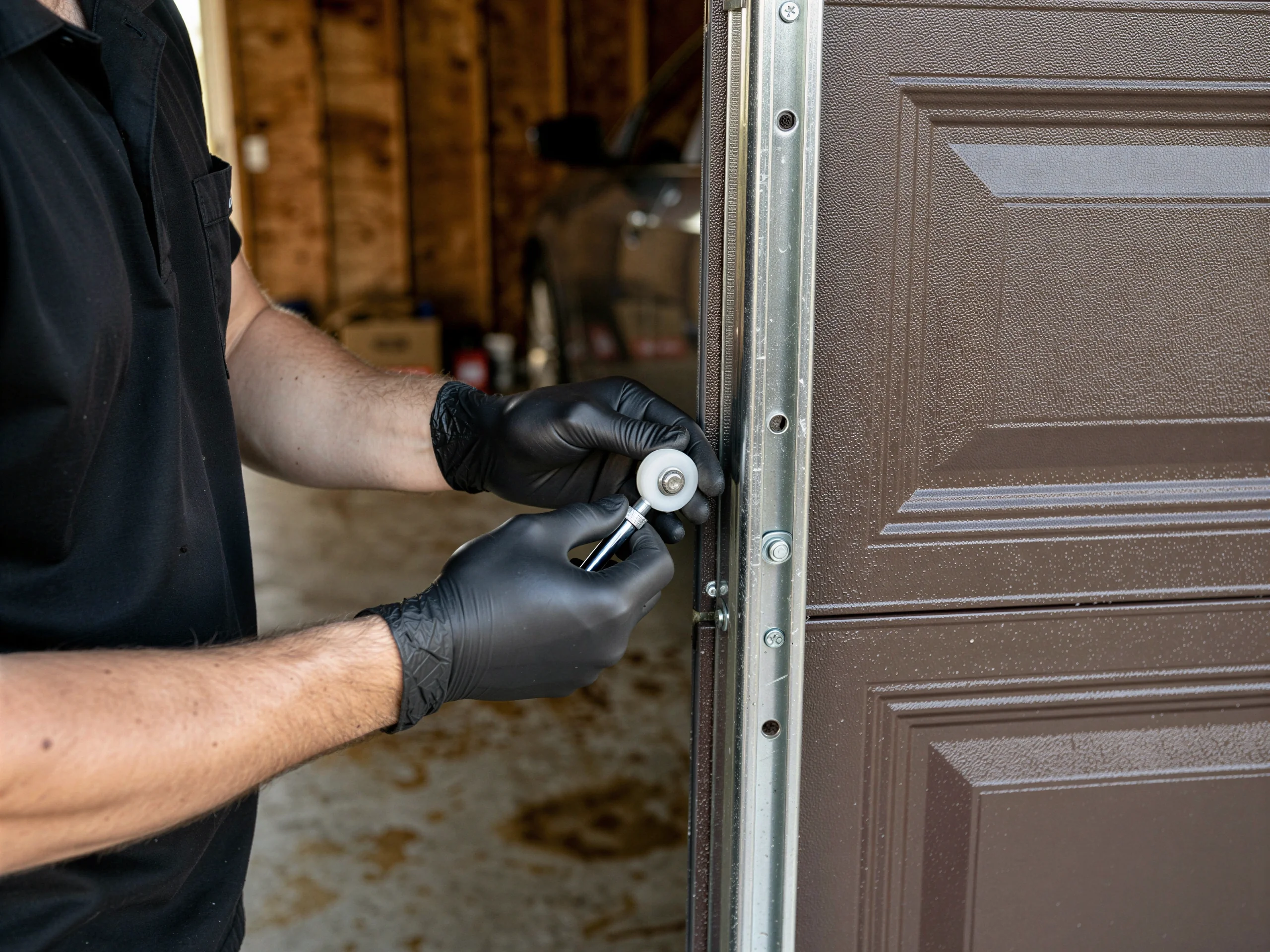
Some of it, yes. Lubricating rollers and hinges, tightening loose bolts on the track brackets, cleaning the photo-eye sensors at the bottom of the track - that's homeowner work and it extends the life of everything else.

Spring work isn't. A torsion spring on a double door built to 1979-era loads is wound under enough tension to break a wrist or worse if the winding bars slip, and there's no safe shortcut version of that job. Cable work carries the same risk, since the cables are under tension tied directly to that same spring system. If the door is binding and you can't tell whether it's a track issue or a spring issue, that diagnosis is worth the call - guessing wrong and forcing the opener to compensate is how a $200 repair turns into a $600 one.

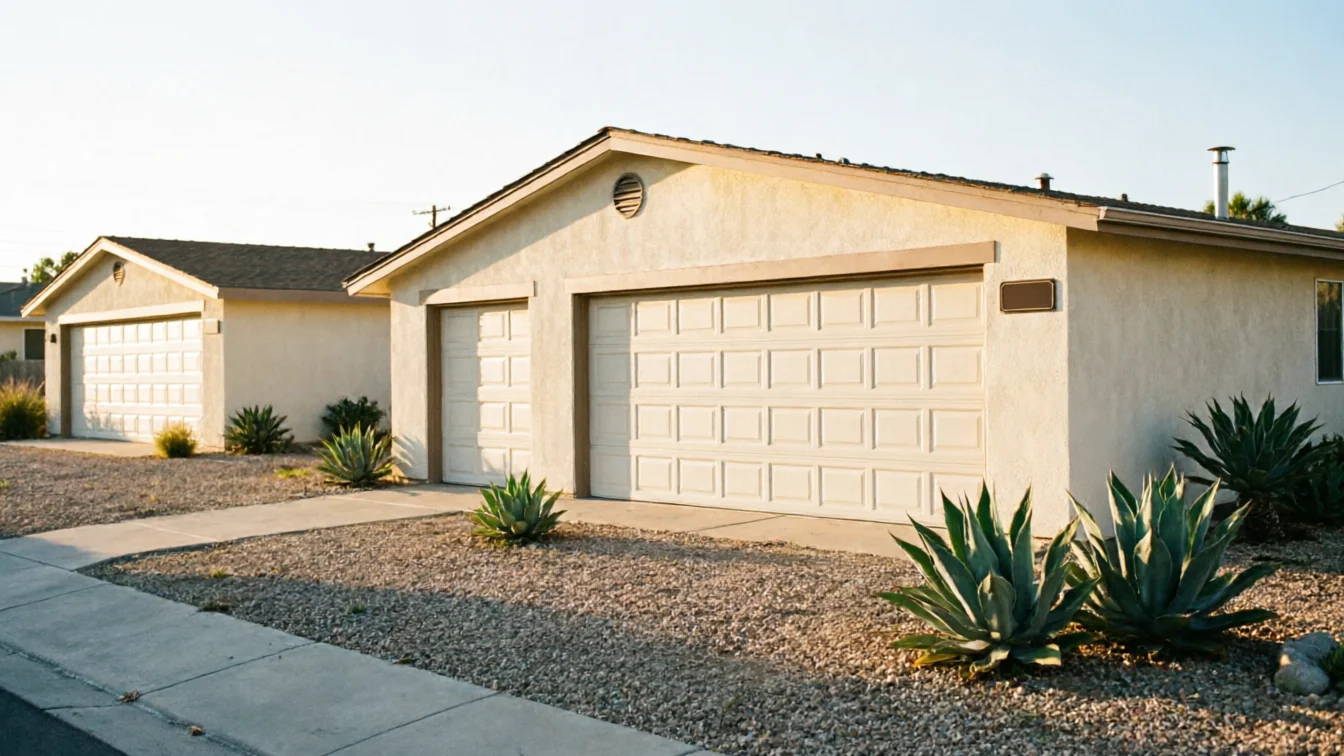
Two houses with tan garage doors and gravel landscaping are visible under a clear sky.

Symptoms

The Symptom

The one we hear most from this area is a door that reverses partway up, or that the opener strains and groans before it lifts at all.

Opener compensating for spring

On a house with an opener installed when the garage was built, that's often the opener's internal force settings compensating for a spring that's lost tension - the motor is trying to do a job the spring used to help with, and the safety reversal kicks in because the door isn't moving the way the opener expects.

Uneven cable stretch

The other common one is a door that looks shut evenly but sits slightly crooked when you look at it from across the driveway. That's usually one cable stretched more than the other, or a roller that's worn through on one side of the track and not the other. Neither is an emergency, but both get worse the longer they run, and both are cheaper to fix before the opener motor takes the strain.

Local causes

Why This Fails Locally

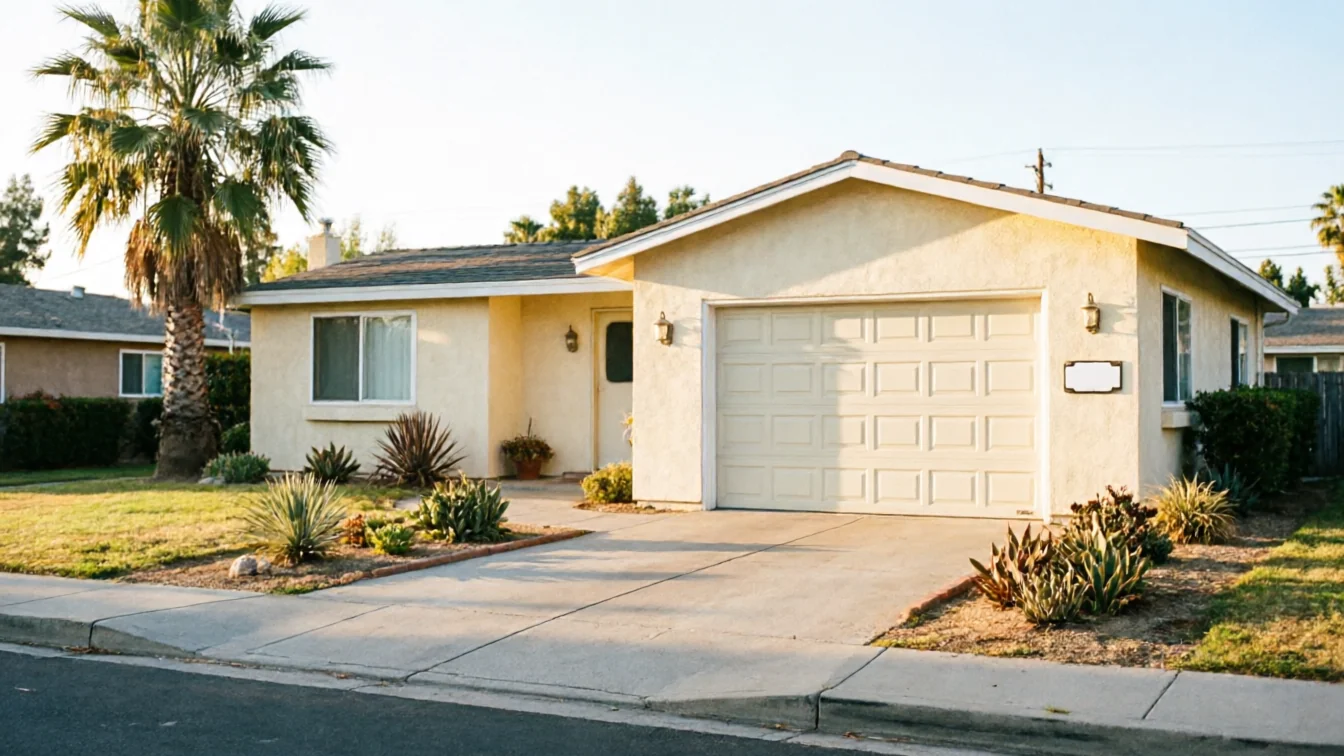
A light yellow house with a white garage door and a palm tree in the front yard.

Union City's median build year of 1979 puts most of its garage doors a full opener-generation ahead of the oldest housing stock elsewhere in the service area. That means more chain-drive openers from the early mass-market era, and fewer of the older direct-drive or manual lift setups you'd still find in houses built closer to 1965. The parts that fail here tend to be the opener gear kit and the torsion spring on a double door, not the single-car hardware and manual lift mechanisms that define the older end of the housing stock.

With 21,202 households in the city and a median income of $137,194 - lower than the $163,199 median across the wider service area - the repair-or-replace line sits a little differently here too. At this income level, a full door-and-opener replacement is a real expense to plan around, not an easy upgrade, which is part of why a straight spring and track repair that extends the working life of the original door is usually the first thing worth trying before talking replacement at all. Full details on the garage door work we do out of Alameda are on the main service page; for Union City specifically, see the local page.

Questions

Common questions

Why does a 1979-built house need different spring hardware than an older Alameda house?

Houses built around 1979 in this area were mostly built with two-car garages and steel sectional doors on torsion springs, while older stock from the 1960s often has single-car doors on extension springs. The hardware, the spring sizing, and the failure points are different, so the repair isn't identical just because it's the same company doing it.

Do you have a branch in Union City?

No. This crew works out of Alameda, about 16 miles away, and travels to Union City for scheduled jobs. That distance is factored into scheduling rather than into the repair price, so same-day slots on short notice are more limited out this far than for closer parts of the service area.

Is it worth replacing the whole door or just fixing the spring?

Depends on the door's condition, not just its age. A torsion spring swap on an otherwise sound 1979-era steel door usually makes more financial sense than full replacement, especially given the median income level here. If the panels are rusted through or the track brackets are failing, that calculus changes - we'll tell you which situation you're in.

Ready when you are

Need garage door service in Union City?

Alameda Garage Door Pros repairs and installs garage doors, springs and openers in Alameda, CA and the surrounding area.

Call Now(510) 229-3331